


Veritas Books
Bridging Faith, Scholarship, and Culture
Where does morality come from? Is science rapidly approaching a complete explanation of nature? Do you ever have doubts about your views?
Since 1995, The Veritas Forum has been tackling complex questions of faith and science in higher education, hosting events on college campuses that foster honest discussions about these topics and the relevance of Jesus Christ in all aspects of life.
The Veritas Forum and InterVarsity Press have partnered to present Veritas Books, a unique series designed to connect the deepest questions of life and truth with the person and story of Jesus Christ. Guided by a spirit of genuine exploration and dialogue, both established and emerging Christian thinkers contribute academically rigorous scholarship that sits at the heart of university conversations.
What you'll find in Veritas Books:
- Scholarly engagement from a Christian perspective
- Discussions of key debates in faith, science, culture, and theology
- Honest and thoughtful exploration of some of our culture's deepest questions
- Ideal resources for students, educators, and lifelong learners seeking deeper understanding
Veritas Books provide insightful, culturally relevant, and distinctively Christian perspectives that help readers move toward greater clarity about truth. This series supports both academic and vocational pursuits by engaging world-shaping ideas and encouraging open, meaningful dialogue.
Praise for the Series
Praise for True Paradox "True Paradox is a truly great book. David Skeel, a brilliant Ivy League scholar who is one of America's most widely respected legal thinkers, illuminates what Christianity does—and does not—teach about beauty, tragedy, justice and eternal life. True Paradox should be read (along with the Bible) and discussed (with no questions off limits) by thinking people of all faiths and of no faith. I will be giving the book as a gift not only to fellow Catholic friends but to friends who are agnostics and atheists."
—John J. DiIulio Jr., first director of the White House Office of Faith-Based Initiatives and Frederic Fox Leadership Professor of Politics, Religion, and Civil Society at the University of Pennsylvania
Praise for A Place for Truth "These essays, mostly by Christian thinkers, are serious dialogue about important questions. Whether you find in them enlightenment and encouragement, or much to challenge, I hope you will agree that The Veritas Forum has done a service to the academy by encouraging the discussions."
—from the foreword by Harry Lewis, former dean, Harvard College, and author of Excellence Without a Soul
Praise for Finding Calcutta "Mary Poplin takes us on a pilgrimage toward clarity about who we are and what our life amounts to. The pilgrimage is simultaneously through Calcutta and through the heart of the 'sophisticated' dynamics of university life in America. As it proceeds we gain a better understanding of the social forces that govern the university in the name of intellect--but falsely so. It will be of special help to those engaged in academic life, at whatever level. They will find here a guide who has been grasped by God and enabled to see that life and the surrounding cultural world for what they really are, and what under God they could be."
—Dallas Willard, author of The Divine Conspiracy and Hearing God
Praise for Is Reality Secular? "This masterful book will be a much-debated and a welcome addition to graduate and undergraduate courses in religion, philosophy, and social and political culture. I suspect readers will spend many hours pondering the powerful arguments that Poplin advances."
—Carol M. Swain, professor of political science and law, Vanderbilt University
Subtotal: $0.00
-
 paperback
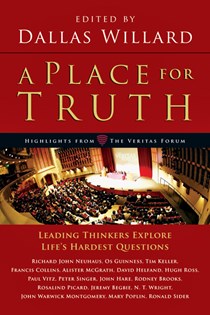
A Place for Truth
Leading Thinkers Explore Life's Hardest Questions
Veritas Books
Edited by Dallas Willard
Since its founding at Harvard in 1992, The Veritas Forum has provided a place for the university world to explore the deepest questions of truth and life. Now gathered in one volume are some of The Veritas Forum's most notable presentations, withcontributions from Francis Collins, Tim Keller, N. T. Wright, Mary Poplin and more. Volume editor Dallas Willard introduces each presentation, highlighting its significance and putting it in context for us today.
-
 paperback
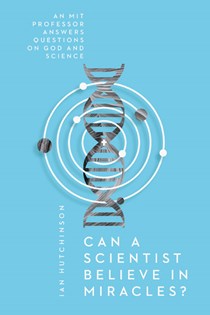
Can a Scientist Believe in Miracles?
An MIT Professor Answers Questions on God and Science
Veritas Books
by Ian Hutchinson
Plasma physicist Ian Hutchinson has been asked hundreds of questions about faith and science. Is God’s existence a scientific question? Is the Bible consistent with the modern scientific understanding of the universe? Are there scientific reasonsto believe in God? In this comprehensive volume, Hutchinson answers a full range of inquiries with sound scientific insights and measured Christian perspective.
-
 paperback
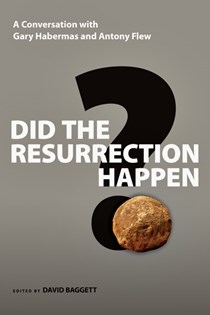
Did the Resurrection Happen?
A Conversation with Gary Habermas and Antony Flew
Veritas Books
by Gary R. Habermas and Antony Flew
Edited by David BaggettThis book presents the full content of the third and final debate between philosopher Antony Flew--who was, until 2004, one of the world's most prominent atheists--and Christian philosopher Gary Habermas. Included as well are transcripts of the QA session with the audience afterward, a 2004 conversation between Habermas and Flew shortly after Flew's much-publicized change of position to theism, as well as editor David Baggett's assessment and analysis of the full history of Habermas and Flew's interactions.
-
 paperback
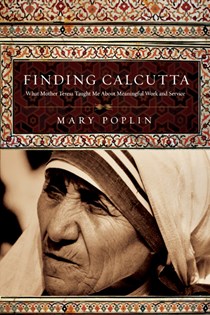
Finding Calcutta
What Mother Teresa Taught Me About Meaningful Work and Service
Veritas Books
by Mary Poplin
Mary Poplin's chronicle of her volunteer work with the Missionaries of Charity in Calcutta provides an inside glimpse into Mother Teresa's life of service to the poor. Transformed by the experience, Poplin discovered how all of us can find our ownplaces of meaningful work and service.
-
 paperback
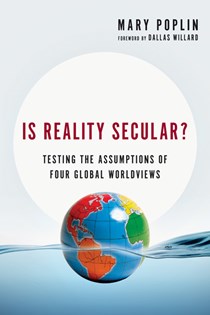
Is Reality Secular?
Testing the Assumptions of Four Global Worldviews
Veritas Books
by Mary Poplin
Foreword by Dallas WillardWhat is the nature of reality? What does it mean to be human? And how do we account for ethics and morality? Mary Poplin examines naturalism, humanism, pantheism and Judeo-Christian theism and explores the fundamental assumptions and limitations of each perspective.
-
 paperback
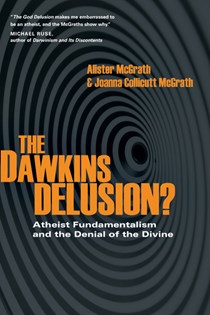
The Dawkins Delusion?
Atheist Fundamentalism and the Denial of the Divine
Veritas Books
by Alister McGrath and Joanna Collicutt McGrath
Alister McGrath and Joanna Collicutt McGrath present a reliable assessment of The God Delusion by Richard Dawkins, famed atheist and scientist, and the many questions this book raises--including, above all, the relevance of faith and thequest for meaning.
-
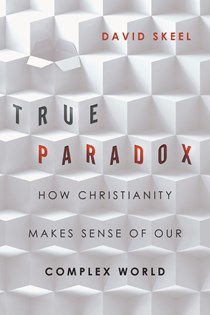 paperback
True Paradox
How Christianity Makes Sense of Our Complex World
Veritas Books
by David Skeel
The complexity of the contemporary world is sometimes seen as an embarrassment for Christianity. But law professor David Skeel makes a fresh case for how Christianity offers plausible explanations for the central puzzles of our existence and provides a comprehensive framework for understanding human life as we actually live it.


