

HCV
-
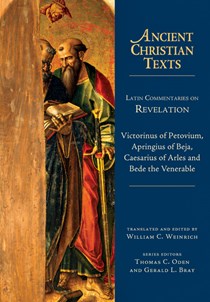 hardcover
Latin Commentaries on Revelation
Ancient Christian Texts
by Victorinus of Petovium, Apringius of Beja, Caesarius of Arles, and Bede the Venerable
Series edited by Thomas C. Oden and Gerald Bray
Edited and Translated by William C. WeinrichInterest in the book of Revelation in the Western tradition is stronger and earlier than that in the East. The earliest full commentary on the Apocalypse is that of Victorinus of Petovium written in the mid to late third century by the earliest exegete to write in Latin. Victorinus interpreted Revelation in millennialist terms, a mode of interpretation already evident in works by Irenaeus, as well ...
-
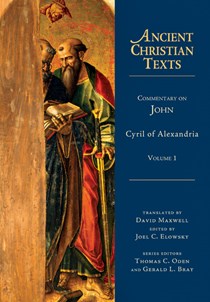 hardcover
Commentary on John
Ancient Christian Texts
by Cyril of Alexandria
Edited by Joel C. Elowsky
Translated by David R. MaxwellCyril of Alexandria (ca. 378-444), one of the most brilliant representatives of the Alexandrian theological tradition, is best known for championing the term Theotokos (God-bearer) in opposition to Nestorius of Constantinople. Cyril's great Commentary on John, offered here in the Ancient Christian Text series in two volumes, predates the Nestorian controversy, however, and focuses its theological ...
-
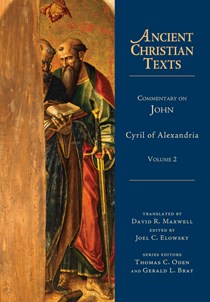 hardcover
Commentary on John
Ancient Christian Texts
by Cyril of Alexandria
Edited by Joel C. Elowsky
Translated by David R. MaxwellCyril of Alexandria (ca. 378-444), one of the most brilliant representatives of the Alexandrian theological tradition, is best known for championing the term Theotokos (God-bearer) in opposition to Nestorius of Constantinople. Cyril's great Commentary on John, offered here in the Ancient Christian Texts series in two volumes, predates the Nestorian controversy and focuses its theological ...
-
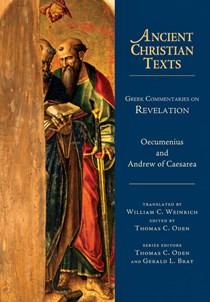 hardcover
Greek Commentaries on Revelation
Ancient Christian Texts
by Oecumenius and Andrew of Caesarea
Edited by Thomas C. Oden
Translated by William C. WeinrichThe Eastern church gives little evidence of particular interest in the book of Revelation. Oecumenius of Isauria's commentary on the book is the earliest full treatment in Greek and dates only from the early sixth century. Along with Oecumenius'scommentary, only that of Andrew of Caesarea (dating from the same era and often summarizing Oecumenius before offering a contrary opinion) and that of Arethas ...
-
 hardcover
We Believe in the Holy Spirit
Ancient Christian Doctrine Series
Edited by Joel C. Elowsky
General Editor Thomas C. Oden"The Spirit blows where it pleases," Jesus said to Nicodemus. "You hear its sound but you cannot tell where it comes from or where it is going. So it is with everyone born of the Spirit."
The Spirit, like the wind, is hard to pin down. Any discussion of the Spirit is fraught with the difficulty of speaking about something or someone who defies definition and who purposely ...
-
 hardcover
We Believe in One Holy Catholic and Apostolic Church
Ancient Christian Doctrine Series
Edited by Angelo Di Berardino
When was the church founded? Jesus spoke of the kingdom of God and not of a religious organization subsequently called church. We don't find in the Gospels expressions which make reference to the foundation of a new religious community, a new and distinct community of followers of Jesus. But after the resurrection of Jesus, his followers, as a result of his express command, gather ...
-
 hardcover
We Believe in One God
Ancient Christian Doctrine Series
Edited by Gerald Bray
"We believe in one God, the Father." The opening clause of the Nicene Creed can be summed up in a single word—monotheism. In the early centuries of the church, this striking doctrine stood starkly against a cultural background of multiple deities and spiritual powers. While it clearly builds on its Jewish heritage, calling God "Father" anticipates the Father-Son relationship ...
-
 hardcover
We Believe in One Lord Jesus Christ
Ancient Christian Doctrine Series
Edited by John Anthony McGuckin
"Who do you say that I am?" This question that Jesus asked of his disciples, so central to his mission, became equally central to the fledgling church. How would it respond to the Gnostics who answered by saying Jesus was less than fully human? How would it respond to the Arians who contended he was less than fully God? It was these challenges that ultimately provoked the Council ...
-
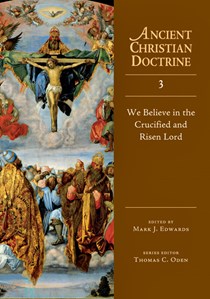 hardcover
We Believe in the Crucified and Risen Lord
Ancient Christian Doctrine Series
Edited by Mark J. Edwards
The resurrection changed everything. "But for the resurrection," writes Mark J. Edwards, "there would have been no reason to argue for a union of two natures in the person of Christ, let alone for a dyad or triad in the Godhead. All that he had said and done in the course of his earthly ministry would have sat well enough with the character of a prophet who excelled such predecessors ...
-
 hardcover
New Bible Commentary
The New Bible Set
Edited by Gordon J. Wenham, J. A. Motyer, D. A. Carson, and R. T. France
Christianity Today Book of the Year
Setting the Standard for Evangelical Commentary on Scripture
For decades, the New Bible Commentary has set the standard for works of its kind. Inthis fourth edition, this accessible volume brings together many respected scholars to meet the needs of students, teachers and Bible readers, offering ...


