

Search Results
Showing 141 - 150 of 2408 results
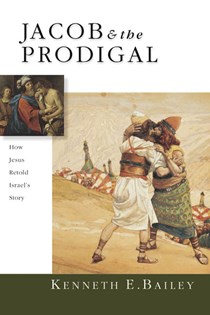 Paperback
Jacob & the Prodigal
How Jesus Retold Israel's Story
by Kenneth E. Bailey
Israel, the community to which Jesus belonged, took its name from their patriarch Jacob. His story of exile and return was their story as well.In the well-known tale of the prodigal son, Jesus reshaped the story in his own way and for his own purposes. In this work, Kenneth E. Bailey compares the Old Testament saga and the New Testament parable. He unpacks similarities freighted with theological ...
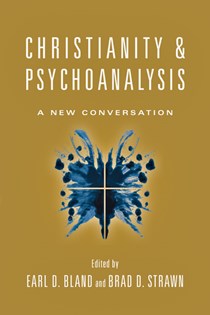 Paperback
Christianity & Psychoanalysis
A New Conversation
Christian Association for Psychological Studies Books
Edited by Earl D. Bland and Brad D. Strawn
Unsurprisingly, given Sigmund Freud's understanding of religion, the conversation between Christianity and psychoanalysis has long been marked by mutual suspicion. Psychoanalysis originated within a naturalist, post-Enlightenment context and sought to understand human functioning and pathology--focusing on phenomena such as the unconscious and object representation--on a strictly empirical basis. ...
 Paperback
2 Corinthians
A Commentary on the New Testament
The IVP New Testament Commentary Series
by Linda L. Belleville
Though few church squabbles today come close to matching the intensity and seriousness of what Paul faced in the commercial and hedonistic hotbed of Corinth, his strategies and pastoral wisdom in confronting the problems there can still serve as ahelpful model for us in responding to a culture marked by individualism and materialism.In this careful study of 2 Corinthians, readers will find an introduction ...
 Paperback
1 Peter
A Commentary on the New Testament
The IVP New Testament Commentary Series
by I. Howard Marshall
- Recipient of a Christianity Today 1992 Critics' Choice Award
As a young church in a hostile environment, Peter's first readers found in his letter encouragement, not just for facing suffering, but for living responsibly in the world as faithful disciples of Jesus Christ. Christians today will also find in Peter's letter a wealth of practical counsel on how to conduct themselves ...
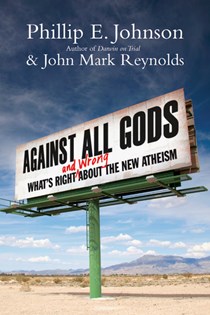 Paperback
Against All Gods
What's Right and Wrong About the New Atheism
by Phillip E. Johnson and John Mark Reynolds
The father of the intelligent design movement, Phillip Johnson, thinks the new atheists are right! How? They've put serious discussion about God back on the public agenda.
Despite their conclusions, folks like Richard Dawkins, Sam Harris and Daniel Dennett are asking the right questions. They're making belief in any religion an issue again, especially in the university context where, for ...
 Paperback
The Message of 2 Timothy
The Bible Speaks Today Series
by John Stott
After teaching many times from the book of 2 Timothy, John Stott writes, "I have been impressed afresh by the timeliness for today of what the apostle writes, especially for young Christian leaders. For our era too is one of theological and moral confusion, even of apostasy. And the apostle summons us, as he summoned Timothy, to be strong, brave and steadfast."
In this revised ...
 Paperback
The Message of 1 Corinthians
The Bible Speaks Today Series
by David Prior
The ancient city of Corinth was well-known for its prosperity, diversity—and debauchery. Any church planted there was bound to have problems. Indeed, snobbishness, divisiveness, insensitivity, doctrinal looseness, and overexuberance were all too common in the Corinthian church. When the apostle Paul heard about these difficulties, he was grieved because he had founded the church ...
 Paperback
The Message of 2 Corinthians
The Bible Speaks Today Series
by Paul W. Barnett
The letter of 2 Corinthians reveals a powerful debate between the apostle Paul and a shadowy group of opponents, along with the local church members who supported them. Paul records a range of emotional extremes as he defends hisdoctrine, ministry, and character to this beloved yet troublesome congregation. In his response to the conflict, Paul develops a momentous theological message: ...
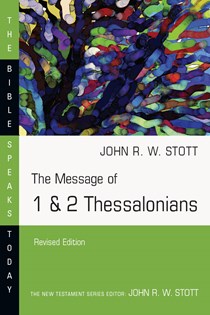 Paperback
The Message of 1 & 2 Thessalonians
The Bible Speaks Today Series
by John Stott
The gospel shapes the church and the church spreads the gospel. In his heartfelt letters to the Thessalonians, the apostle Paul calls believers again and again to these essential truths. To encourage and correct the young church in Thessalonica, Paul addresses many issues that are still of vital importance today, such as Christian community, church leadership, moral living, evangelism, ...
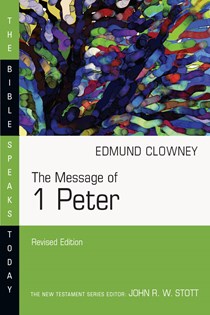 Paperback
The Message of 1 Peter
The Bible Speaks Today Series
by Edmund P. Clowney
The letter of 1 Peter is a traveler's guide for Christian pilgrims. To believers scattered throughout Asia Minor, Peter wrote with a reminder that they were temporary residents, strangers looking toward their true homeland. As stormy persecutions were beginning in the region, Peter brought a message of hope, encouraging readers to see their lives in the context of God's great work ...


