

|
The Trinity & Subordinationism
Paperback
|
- Length: 282 pages
- Dimensions: 6 × 9 in
- Published: July 10, 2002
- Imprint: IVP Academic
- ISBN: 9780830826636
-
Available at all major retailers!
Amazon
Barnes & Noble
Bookshop.org
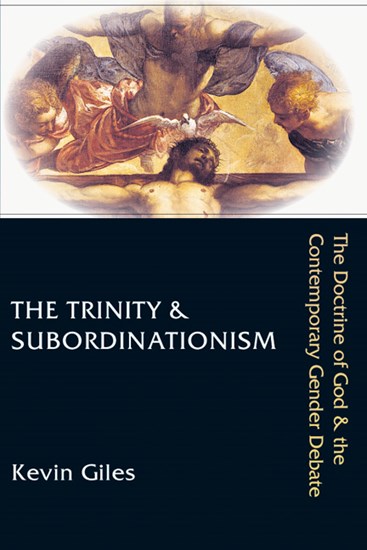
Subordination has been and still is a controversial subject within the church.The concept has been vigorously debated in relation to the doctrine of the Trinity since the fourth century. Certain New Testament texts have made it part of discussionsof right relations between men and women. In recent years these two matters have been dramatically brought together. Indeed, today the doctrine of the Trinity is being used to support opposing views of the right relationship between men and women inthe church.At the center of the debate is the question of whether or not the orthodox view of the trinitarian relations teach the eternal subordination of the Son of God. In this book Kevin Giles masterfully traces the historic understanding of thedoctrine of the Trinity from the patristic age to our own times to help resolve this important question. But he does not stop there.Giles goes on to provide an illuminating investigation of a closely related question--whether or not women, even in terms of function or role, were created to be permanently subordinated to men. By surveying the church's traditional interpretation of texts relating to the status of women and inquiring into the proper use of the doctrine of the Trinity, Giles lays out his position in this current debate.
CONTENTS
Introduction
Part 1: The Trinity Tradition: Affirmed by All but Actually Rejected by Some
1. Conservative Evangelicals Head Off on Their Own
2. The Historical Development of the Orthodox Trinitarian Tradition
3. Subordinating Tradition
4. The Retrieval Refinement of the Nicene Trinitarian Tradition in the Twentieth Century
5. Evangelicals at the End of a Very Thin Branch
Appendix A: Trintariograms
Appendix B: The 1999 Sydney Anglican Diocesan Doctrine Comission Report:
"The Doctrine of Trinity Its Bearing On the Relationship of Men and Women"
Part 2: The Woman Tradition: Reinterpreted by Some, Rejected by Others
6. Women in the Modern World In Christian Tradition
7. Women in Contemporary Hierarchical-Complementarian Literature
8. Exegesis or Eisegesis?
9. An Egalitarian-Complementarian Theological Reading of the Bible
Part 3: The Slavery Tradition: Rejected by All--Some in Ignorance Some in Painful Awareness of Its Past Consequences
10. The Proslavery Tradition: The Bible Endorses the Institution of Slavery
11. The Rejection of the Proslavery Tradition
12. The ParallelExhortations to Men Women to Be Subordinate
13. Lessons to Be Learned Concluding Thoughts
Appendix C: Homosexuality--A Test Case
Indexes


