

Spectrum Multiview Book Series
Wrestle with Complex Questions in Conversation with Expert Scholars
The Spectrum Multiview Book Series from IVP Academic fosters thoughtful engagement with some of the most pressing Christian academic debates. For those seeking in-depth scholarly discussions and a broader understanding of theological perspectives, the series brings together respected scholars to present, confront, and reflect on differing viewpoints. Since this groundbreaking approach was pioneered by InterVarsity Press in 1977 with The Meaning of the Millennium, this dynamic format allows each contributor to offer a compelling case for their position, followed by insightful responses from fellow contributors.
Covering topics from theology and science to philosophy and practical ministry, the Spectrum Multiview Book Series invites readers to wrestle with complex questions at the heart of Christian thought. With more than 20 volumes, the series provides a platform for academic dialogue, encouraging believers to clarify their beliefs while appreciating the convictions of others. By equipping readers with a rich array of perspectives, this series seeks to create space for reflection, growth, and deeper thought.
Praise for Books in the Series
"I found this discussion fascinating as the writers probed and illuminated the mysteries of original sin and the fall from different angles. I came away with a sense that the interlocutors were talking to one another, not just saying their own piece and walking away. This is exactly how a multiview volume should work, modeling charitable yet critical discussion and moving the reader to offer a personal response."
—Matt Jenson, associate professor of theology, Torrey Honors Institute of Biola University
"The directness of the responses is a strength of the book. It serves to highlight differences, expose weak points, and provide the reader with questions and issues to pursue. The book makes a positive contribution both through highlighting the diversity of thinking about the atonement within evangelicalism and through encouraging discussion about this diversity."
—Mark D. Baker, Religious Studies Review, March 2010
"This book is worthwhile reading and will stimulate thoughtful reactions across multiple theological perspectives. It challenges the reader to consider new and diverse perspectives in a respectful, congenial fashion, and makes a good addition to one's library."
—Stephen Bauer, Andrews University Seminary Studies, Spring 2018
Subtotal: $0.00
-
 paperback
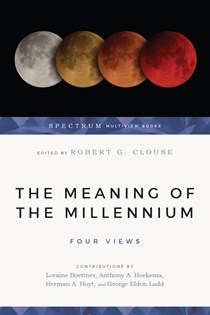
The Meaning of the Millennium
Four Views
Spectrum Multiview Book Series
Contributions by George Eldon Ladd, Herman A. Hoyt, Loraine Boettner, and Anthony A. Hoekema
Edited by Robert G. ClouseRobert G. Clouse brings together four scholars to debate various views on the millennium: George Eldon Ladd, Herman A. Hoyt, Loraine Boettner and Anthony A. Hoekema.
-
 paperback
Predestination and Free Will
Four Views of Divine Sovereignty and Human Freedom
Spectrum Multiview Book Series
Contributions by John Feinberg, Norman L. Geisler, Bruce Reichenbach, and Clark H. Pinnock
Edited by David Basinger and Randall BasingerDavid Basinger and Randall Basinger present four different answers to the question "If God is in control, are people really free?" Contributors include John Feinberg, Norman Geisler, Bruce Reichenbach and Clark Pinnock.
-
 paperback
Christian Spirituality
Five Views of Sanctification
Spectrum Multiview Book Series
Contributions by Gerhard O. Forde, Sinclair B. Ferguson, Laurence W. Wood, Russell P. Spittler, and E. Glenn Hinson
Edited by Donald AlexanderHow can we grow closer to God? Is there a secret to spiritual life? Do we need a second blessing? Is sanctification instantaneous or is it a process? The nature of Christian spirituality has been widely debated throughout the history of the church. Donald L. Alexander brings together five scholars in a fascinating debate on sanctification and spirituality.
-
 paperback
Women in Ministry
Four Views
Spectrum Multiview Book Series
Contributions by Robert Culver, Susan T. Foh, Walter L. Liefeld, and Alvera Mickelsen
Edited by Bonnidell Clouse and Robert G. ClouseShould women teach men? Should they exercise authority over men? What about ordaining women? Even those who agree that Scripture must determine our answers do not agree on what it teaches. In this volume deeply committed evangelicals Robert D. Culver, Susan T. Foh, Walter L. Liefeld, and Alvera Mickelsen present their own views and respond to the others.
-
 paperback
Divorce and Remarriage
Four Christian Views
Spectrum Multiview Book Series
Contributions by J. Carl Laney, William A. Heth, Thomas R. Edgar, and Larry Richards
Edited by H. Wayne HouseEditor H. Wayne House introduces a lively debate on varying Christian views of divorce and remarriage. Contributors include J. Carl Laney, William Heth, Thomas Edgar and Larry Richards.
-
 paperback
What About Those Who Have Never Heard?
Three Views on the Destiny of the Unevangelized
Spectrum Multiview Book Series
Edited by Gabriel J. Fackre, Ronald H. Nash, and John Sanders
Ronald H. Nash, Gabriel Fackre and John Sanders offer three evangelical views on the destiny of the unevangelized.
-
 paperback
Two Views of Hell
A Biblical & Theological Dialogue
Spectrum Multiview Book Series
by Edward William Fudge and Robert A. Peterson
Here you'll find a frank debate between Edward William Fudge and Robert A. Peterson who present strong theological and scriptural evidence for two opposing views of the nature of hell.
-
 paperback
Science & Christianity
Four Views
Spectrum Multiview Book Series
Contributions by Howard J. Van Till, Stephen C. Meyer, Jean Pond, Wayne F. Frair, and Gary D. Patterson
Edited by Richard F. CarlsonSix contributors here debate the relative merits of four distinct conceptions of the relationship between Christianity and science today. Views range from a strict creationist posture to full-fledged partnership. Edited by Richard F. Carlson.
-
 paperback
God and Time
Four Views
Spectrum Multiview Book Series
Contributions by Paul Helm, William Lane Craig, Alan G Padgett, and Nicholas Wolterstorff
Edited by Gregory E. GanssleEditor Gregory Ganssle calls on four Christian philosophers to present and defend their views on the place of God in a time-bound universe. The positions taken up here include divine timeless eternity, eternity as relative timelessness, timelessness and omnitemporality, and unqualified divine temporality.
-
 paperback
Divine Foreknowledge
Four Views
Spectrum Multiview Book Series
Contributions by Gregory A. Boyd, David Hunt, William Lane Craig, and Paul Helm
Edited by James K. Beilby and Paul R. EddyJoin Paul Helm, David Hunt, William Lane Craig and Gregory A. Boyd as they share four distinct views on the openness of God. Edited by James K. Beilby Paul R. Eddy.
-
 paperback
The Nature of the Atonement
Four Views
Spectrum Multiview Book Series
Contributions by Gregory A. Boyd, Joel B. Green, Bruce Reichenbach, and Thomas R. Schreiner
Edited by James K. Beilby and Paul R. EddyJames K. Beilby and Paul R. Eddy edit a collection of essays on four views of atonement: the healing view, the Christus Victor view, the kaleidoscopic view and the penal substitutionary view. This is a book that will help Christians understand theissues, grasp the differences and proceed toward a clearer articulation of their understanding of the atonement.
-
 paperback
Church, State and Public Justice
Five Views
Spectrum Multiview Book Series
Contributions by Clarke E. Cochran, Derek H. Davis, Corwin E. Smidt, Ronald J. Sider, and J. Philip Wogaman
Edited by Paul C KemenyEdited by P. C. Kemeny, these five essays represent five major views of the relationship of the church and Christian teaching with respect to matters of public justice administered by our government. Each essay includes a response from the other four viewpoints.
-
 paperback
The Lord's Supper
Five Views
Spectrum Multiview Book Series
Contributions by Jeffrey Gros, John R. Stephenson, Leanne Van Dyk, Roger E. Olson, and Veli-Matti Kärkkäinen
Edited by Gordon T. SmithThe theological understanding of the Lord's Supper is presented by members of five differing theological traditions: Roman Catholic, Lutheran, Reformed, Pentecostal and Baptist. Each contributor responds to the others, helping readers to understand the convergence and divergence among the five traditions.
-
 paperback
Baptism
Three Views
Spectrum Multiview Book Series
Contributions by Sinclair B. Ferguson, Bruce A. Ware, and Tony Lane
Edited by David F. WrightIn Baptism: Three Views, editor David F. Wright has provided a forum for thoughtful proponents of three principal evangelical views on baptism to state their case, respond to the others, and then provide a summary response and statement.Sinclair Ferguson sets out the case for infant baptism, Bruce Ware presents the case for believers' baptism, and Anthony Lane argues for a mixed practice.
-
 paperback
Psychology and Christianity
Five Views
Spectrum Multiview Book Series
Contributions by David G. Myers, Stanton L. Jones, Robert C. Roberts, P. J. Watson, John H. Coe, Todd W. Hall, and David A. Powlison
Edited by Eric L JohnsonHow are Christians to understand and undertake the discipline of psychology? This question has been of keen interest because of the importance we place on a correct understanding of human nature.This collection of essays edited by Eric Johnson andStanton Jones offers four different models for the relationship between Christianity and psychology.
-
 paperback
The Historical Jesus
Five Views
Spectrum Multiview Book Series
Contributions by Robert M. Price, John Dominic Crossan, Luke Timothy Johnson, James D. G. Dunn, and Darrell L. Bock
Edited by James K. Beilby and Paul R. EddyThe Historical Jesus: Five Views provides a venue for readers to sit in on a virtual seminar on the historical Jesus. Beginning with a scene-setting historical introduction by the editors, prominent figures in the Jesus quest set forth their views and respond to their fellow scholars. For both the classroom and personal study, this is a book that fascinates, probes and engages.
-
 paperback
Justification
Five Views
Spectrum Multiview Book Series
Contributions by Michael S. Horton, Michael Bird, James D. G. Dunn, Veli-Matti Kärkkäinen, Gerald O'Collins, and Oliver Rafferty
Edited by James K. Beilby and Paul R. Eddy
Associate Editor Steven E. EnderleinJames Beilby, Paul R. Eddy and Steven E. Enderlein moderate this five-way discussion on the Pauline doctrine of justification. The traditional Reformed view, the progressive Reformed view, the new perspective, the deification/theosis view and theRoman Catholic view are each given a fair hearing.
-
 paperback
Biblical Hermeneutics
Five Views
Spectrum Multiview Book Series
Edited by Stanley E. Porter and Beth M. Stovell
This book presents proponents of five approaches to biblical hermeneutics and allows them to respond to each other. The five approaches are the historical-critical/grammatical (Craig Blomberg), redemptive-historical (Richard Gaffin), literary/postmodern (Scott Spencer), canonical (Robert Wall) and philosophical/theological (Merold Westphal) views.
-
 paperback
Faith and Reason
Three Views
Spectrum Multiview Book Series
Edited by Steve Wilkens
Steve Wilkens edits a debate between three different understandings of the relationship between faith and reason, between theology and philosophy. The three views include: Faith and Philosophy in Tension, Faith Seeking Understanding and the Thomistic Synthesis. This introduction to a timeless quandary is an essential resource for students.
-
 paperback
God and the Problem of Evil
Five Views
Spectrum Multiview Book Series
Edited by Chad Meister and James K. Dew Jr.
The problem of evil has produced many responses and elicited vigorous debate. In this multiview book, five philosophical theologians discuss and defend different solutions to this ancient problem: Phillip Cary on the classic view, William Lane Craig on Molinism, William Hasker on open theism, Thomas Jay Oord on essential kenosis, and Stephen Wykstra on skeptical theism.
-
 paperback
Christian Ethics
Four Views
Spectrum Multiview Book Series
Edited by Steve Wilkens
Steve Wilkens edits a conversation between four major approaches to contemporary ethics in the Christian tradition: virtue, divine command, natural law, and prophetic. This accessible introduction includes contributions by Brad Kallenberg, John Hare, Claire Peterson, and Peter Heltzel.
-
 paperback
Evangelical Theological Method
Five Views
Spectrum Multiview Book Series
Edited by Stanley E. Porter and Steven M. Studebaker
How should one approach the task of theology? This Spectrum volume brings together five evangelical theologians with distinctly different approaches to the theological task who present their own approach and respond to each of the other views. Emerging from this theological conversation is an awareness of our methodological commitments and the benefits that each can bring to the theological task.
-
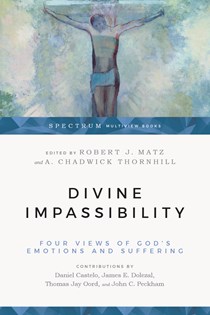 paperback
Divine Impassibility
Four Views of God's Emotions and Suffering
Spectrum Multiview Book Series
Edited by Robert J. Matz and A. Chadwick Thornhill
Does God suffer? Does God experience emotions? Does God change? This Spectrum Multiview volume brings together four theologians who make a case for their own view—ranging from a traditional affirmation of divine impassibility (the idea that God does not suffer) to the position that God is necessarily and intimately affected by creation—and then each contributor responds to the others' views.
-
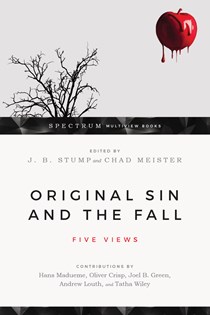 paperback
Original Sin and the Fall
Five Views
Spectrum Multiview Book Series
Edited by J. B. Stump and Chad Meister
Throughout the church's history, Christians have disagreed over many particular questions surrounding humanity's fall. In this Spectrum Multiview book contributors present five views on these questions—Augustinian-Reformed, Moderate Reformed, Wesleyan, Eastern Orthodox, and a Reconceived view—offering both an articulation of their own view and responses to the others.
-
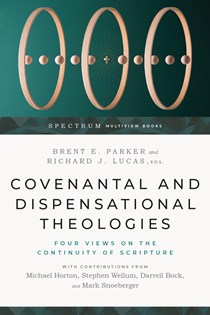 paperback
Covenantal and Dispensational Theologies
Four Views on the Continuity of Scripture
Spectrum Multiview Book Series
Edited by Brent E. Parker and Richard J. Lucas
How do the Old and New Testaments relate to each other? What is the relationship among the biblical covenants? In this volume in IVP Academic's Spectrum series, readers will find four contributors who explore these complex questions, each making acase for their own view and responding to the others' views to offer an animated yet irenic discussion on the continuity of Scripture.
-
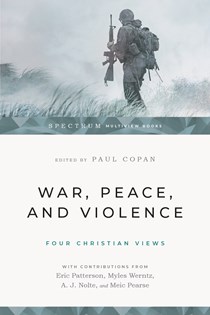 paperback
War, Peace, and Violence: Four Christian Views
Spectrum Multiview Book Series
Edited by Paul Copan
In a world of war, terrorism, and constant threats to global stability, how should Christians honor Jesus Christ? Four experts in Christian ethics, political philosophy, and international affairs present four different views of just war, nonviolence, Christian realism, and church history, orienting readers to today's key positions.


