

Search Results
Showing 71 - 80 of 520 results
 Paperback
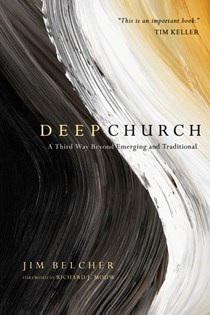
Deep Church
A Third Way Beyond Emerging and Traditional
by Jim Belcher
Foreword by Richard J. MouwChristianity Today Book Award winner
Golden Canon Leadership Book Award winner
Feeling caught between the traditional church and the emerging church? Discover a third way: deep church.
C. S. Lewis used the phrase "deep church" to describe the body of believers committed to mere Christianity. Unfortunately church in our postmodern ...
 Paperback
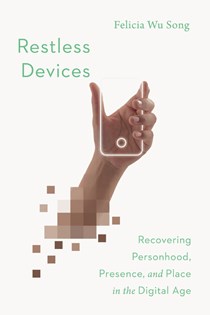
Restless Devices
Recovering Personhood, Presence, and Place in the Digital Age
by Felicia Wu Song
We're being formed by our devices. Today's digital technologies are designed to captivate our attention and encroach on our boundaries, shaping how we relate to time and space, to ourselves and others, even to God. Our natural longing for relationship makes us vulnerable to the "industrializing" effects of social media. While we enjoy the benefits of digital tech, many of ...
 Paperback
The Providence of God
Contours of Christian Theology
by Paul Helm
In this concise and accessible introduction, Paul Helm outlines for students and interested readers the doctrine of divine providence. Unlike many doctrinal treatments, his approach is not historically oriented. Instead Helm focuses on the underlying metaphysical and moral aspects of God's providence, paying particular attention to the ideas of divine control, providence and evil, and the role of ...
 Paperback
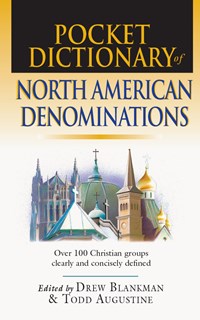
Pocket Dictionary of North American Denominations
Over 100 Christian Groups Clearly Concisely Defined
The IVP Pocket Reference Series
Edited by Drew Blankman and Todd Augustine
Of the making of many denominations there is no end, or so it seems in North America.
Baptists, Lutherans, Methodists, Presbyterians and Schwenkfelders--how do you keep track of them all? What are their differences? Are there similarities? Where do they each belong on the Christian family tree?
Editors Drew Blankman and Todd Augustine have designed the Pocket Dictionary ...
 Paperback
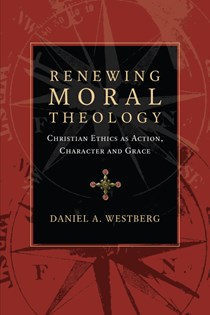
Renewing Moral Theology
Christian Ethics as Action, Character and Grace
by Daniel A. Westberg
While ethical issues are being raised with new urgency, Christians are increasingly unfamiliar with the moral grammar of their faith. The need to reengage the deep-down things of the Christian moral tradition has seldom been more urgent. Moral theology has a long history in the Catholic and Anglican traditions. The tradition of theological ethics, influenced by Aristotle by way of Aquinas, offers ...
-
Ecumenical Dialogue Series
The Ecumenical Dialogue Series seeks to foster engaging dialogue across theological differences. In each of three volumes, contributors explore what it means to be Christian, what it means to identify with a specific tradition in Christianity—Protestant, Roman Catholic, and Eastern Orthodox—and how we can create dialogue and unity across historically tense divisions.
 Paperback
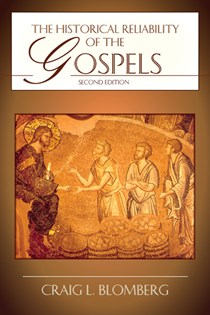
The Historical Reliability of the Gospels
by Craig L. Blomberg
For over twenty years, Craig Blomberg's The Historical Reliability of the Gospels has provided a useful antidote to many of the toxic effects of skeptical criticism of the Gospels. Offering a calm, balanced overview of the history of Gospel criticism, especially that of the late twentieth century, Blomberg introduces readers to the methods employed by New Testament scholars and shows both ...
 Paperback
Why I Am Protestant
Ecumenical Dialogue Series
by Beth Felker Jones
Exploring the Strengths and Challenges of the Protestant Tradition
What does it mean to be Protestant? How can its strengths shape faith in the modern world, and how should its challenges be addressed? With clarity, warmth,and theological depth, Beth Felker Jones explores these questions in Why I Am Protestant. This book offers a positive, theologically grounded reflection ...
 Hardback
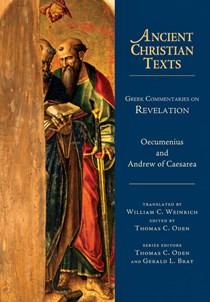
Greek Commentaries on Revelation
Ancient Christian Texts
by Oecumenius and Andrew of Caesarea
Edited by Thomas C. Oden
Translated by William C. WeinrichThe Eastern church gives little evidence of particular interest in the book of Revelation. Oecumenius of Isauria's commentary on the book is the earliest full treatment in Greek and dates only from the early sixth century. Along with Oecumenius'scommentary, only that of Andrew of Caesarea (dating from the same era and often summarizing Oecumenius before offering a contrary opinion) and that of Arethas ...
 Paperback
The Church
Contours of Christian Theology
by Edmund P. Clowney
At a time in which the very word church sounds a tone of dull irrelevance, the doctrine of the church has suffered the studied neglect of many Christian leaders. The persistent demands to market, manage and grow the church and to meet thefelt needs of churched and unchurched all threaten to quench theological reflection on the abiding nature and mission of the church. But few activities ...


