

Search Results
Showing 281 - 290 of 575 results
-
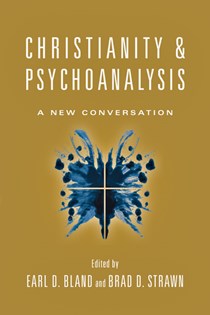 paperback
Christianity & Psychoanalysis
A New Conversation
Christian Association for Psychological Studies Books
Edited by Earl D. Bland and Brad D. Strawn
Unsurprisingly, given Sigmund Freud's understanding of religion, the conversation between Christianity and psychoanalysis has long been marked by mutual suspicion. Psychoanalysis originated within a naturalist, post-Enlightenment context and sought to understand human functioning and pathology--focusing on phenomena such as the unconscious and object representation--on a strictly empirical basis. ...
-
 paperback
Spiritual Care: A Guide for Caregivers
by Judith Allen Shelly
What did I do to deserve cancer?I don't understand it, but I can't seem to pray anymore. Why does God seem so far away?The idea of dying scares me. How can I cope?What do you say to a person in crisis? When illness or tragedy strikes, you may find yourself caring for a family member, friend or neighbor who asks you for answers to some of life's ultimate questions. How ...
-
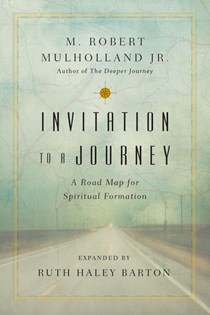 paperback
Invitation to a Journey
A Road Map for Spiritual Formation
Transforming Resources
by M. Robert Mulholland Jr.
Introduction & Study Guide by Ruth Haley BartonEmbark on a Journey of Becoming More Like Christ
M. Robert Mulholland Jr. defines spiritual formation as "the process of being formed in the image of Christ for the sake of others." Compact and solid, this definition encompasses the dynamics of a vital Christian life and counters our culture's tendency to make spirituality a trivial matter or reduce it to a private affair ...
-
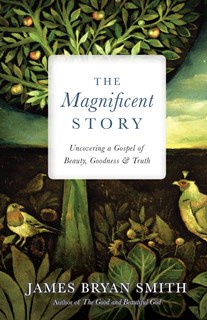 paperback
The Magnificent Story
Uncovering a Gospel of Beauty, Goodness, and Truth
Apprentice Resources
by James Bryan Smith
We are story-making people. We love reading stories—and we love hearing the personal stories of others. We need stories, or narratives, to make sense of our world. And those stories shape our lives. What is the story you have been told about the gospel? About God? About the Christian life? About Jesus? About the cross? About yourself? About heaven?Your answers to these questions will form a story ...
-
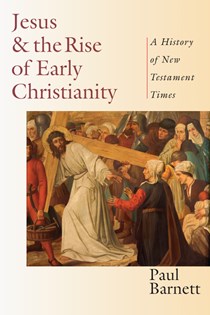 paperback
Jesus and the Rise of Early Christianity
A History of New Testament Times
by Paul W. Barnett
The pathway to understanding the New Testament leads through the vibrant landscape of the first-century Greco-Roman world. The New Testament is rooted in the concrete historical events of that world.In Jesus the Rise of Early Christianity Paul Barnett not only places the New Testament within that world of caesars and Herods, proconsuls and Pharisees, Sadducees and revolutionaries, but argues ...
-
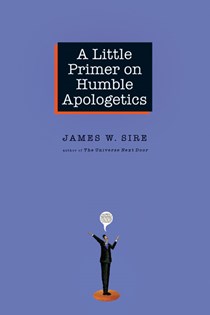 paperback
A Little Primer on Humble Apologetics
by James W. Sire
Always be prepared to make your defense to anyone who demands from you an accounting for the hope that is in you; yet do it with gentleness and reverence. (1 Peter 3:15-16)We've all felt the tension. An opportunity to speak for Christ comes up, and either we jump in with both barrels blasting or we cower in the corner and say nothing. Is there a better way? Can we learn to speak boldly, yet humbly, ...
-
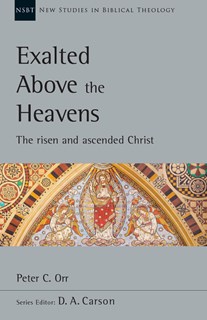 paperback
Exalted Above the Heavens
The Risen and Ascended Christ
New Studies in Biblical Theology
by Peter C. Orr
Series edited by D. A. CarsonChristians usually focus on what Jesus has done (his life, death and resurrection) and what he will do (his second coming and eternal reign). While there has been something of a revival of interest in his ascension, studies of Jesus in his exalted state are relatively rare. However, the Christ that Christians trust in, relate to and love is not only the one who lived, died, rose ...
-
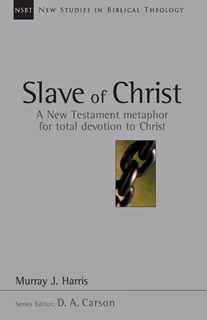 paperback
Slave of Christ
A New Testament Metaphor for Total Devotion to Christ
New Studies in Biblical Theology
by Murray J. Harris
Series edited by D. A. CarsonThe New Testament finds many ways to depict the relationship of Christians and their Lord. They are his disciples, sons, daughters and friends. But it is perhaps too little recognized that they are also his slaves.In this New Studies in Biblical Theology volume, Murray J. Harris sets out to uncover what it means to be a slave of Christ. He begins by assessing the nature of actual slavery in the ...
-
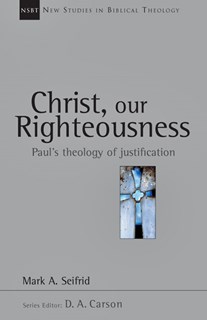 paperback
Christ, Our Righteousness
Paul's Theology of Justification
New Studies in Biblical Theology
by Mark A. Seifrid
Series edited by D. A. CarsonSince the time of the Reformation, considerable attention has been given to the theme of justification in the thought of the apostle Paul. The ground-breaking work of E. P. Sanders in Paul and Palestinian Judaism (1977) introduced the "new perspective on Paul," provoking an ongoing debate which is now dominated by major protagonists. Foundational theological issues are at stake.
In ...
-
 paperback
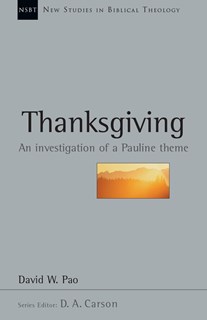
Thanksgiving
An Investigation of a Pauline Theme
New Studies in Biblical Theology
by David W. Pao
Series edited by D. A. Carson"Be thankful" (Colossians 3:15) is a recurring exhortation in the letters of the apostle Paul. No other New Testament writer gives such a sustained emphasis on thanksgiving—and yet, major modern studies of Paul fail to wrestle with it.David Pao aims to rehabilitate this theme in this comprehensive and accessible study, a New Studies in Biblical Theology volume. He shows how, for Paul, thanksgiving ...


