

Search Results
Showing 1081 - 1090 of 2008 results
-
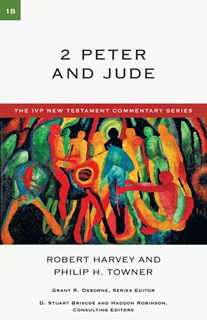 paperback
2 Peter and Jude
A Commentary on the New Testament
The IVP New Testament Commentary Series
by Robert Harvey and Philip H. Towner
The miracle of being forgiven is perhaps equaled only by the wonder of also being trusted again. That wondrous experience in the life of Simon Peter ultimately produced remarkable letters, full of warning and hope, solemn instruction and gloriouspromise. Because of that grace in Peter's past, his words in the book of 2 Peter are able to strengthen we who are his brothers and sisters in faith.Jude ...
-
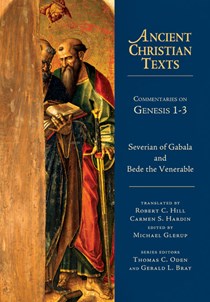 hardcover
Commentaries on Genesis 1-3
Ancient Christian Texts
by Bede the Venerable and Severian of Gabala
Edited by Michael Glerup
Translated by Carmen S. Hardin and Robert C. HillThe church fathers displayed considerable interest in the early chapters of Genesis, and often wrote detailed commentaries or preached series of homilies on the Hexameron--the Six Days of Creation--among them Eustathius of Antioch, Basil the Great, Gregory of Nyssa, Theodore of Mopsuestia, Ambrose, John Chrysostom and Augustine.
This volume of Ancient Christian Texts offers a first-time English ...
-
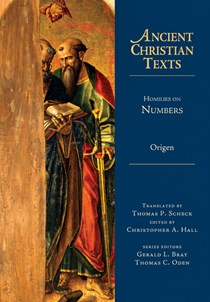 hardcover
Homilies on Numbers
Ancient Christian Texts
by Origen
Edited by Christopher A. Hall
Translated by Thomas P. ScheckOrigen of Alexandria (185-254), one of the most prolific authors of antiquity and arguably the most important and influential pre-Nicene Christian theologian, was a man of deep learning and holiness of life. Regrettably, many of his works are no longer extant, in part due to the condemnation of his ideas by the Fifth Ecumenical Council in 553. The condemnation, however, took little account of his ...
-
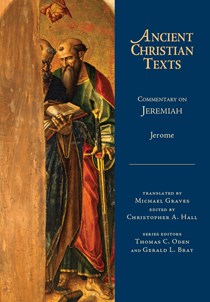 hardcover
Commentary on Jeremiah
Ancient Christian Texts
by Jerome
Edited by Christopher A. Hall
Translated by Michael Graves
Series edited by Thomas C. Oden and Gerald BrayJerome (c. 347-419), one of the West's four doctors of the church, was recognized early on as one of the church's foremost translators, commentators and advocates of Christian asceticism. Skilled in Hebrew and Greek in addition to his native Latin, he was thoroughly familiar with Jewish traditions and brought them to bear on his understanding of the Old Testament. In 405 Jerome completed his Latin ...
-
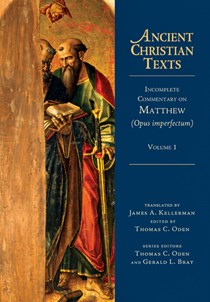 hardcover
Incomplete Commentary on Matthew (Opus imperfectum)
Ancient Christian Texts
Edited by Thomas C. Oden
Translated by James A. KellermanIn the translator's introduction to this volume, James Kellerman relates the following story:
As Thomas Aquinas was approaching Paris, a fellow traveler pointed out the lovely buildings gracing that city. Aquinas was impressed, to be sure, but he sighed and stated that he would rather have the complete Incomplete Commentary on Matthew than to be mayor of Paris itself.
Thomas's ...
-
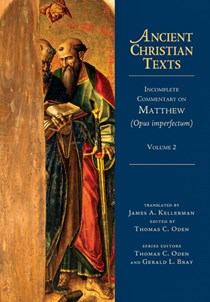 hardcover
Incomplete Commentary on Matthew (Opus imperfectum)
Ancient Christian Texts
Edited by Thomas C. Oden
Translated by James A. KellermanIn the translator's introduction to this volume, James Kellerman relates the following story:
As Thomas Aquinas was approaching Paris, a fellow traveler pointed out the lovely buildings gracing that city. Aquinas was impressed, to be sure, but he sighed and stated that he would rather have the complete Incomplete Commentary on Matthew than to be mayor of Paris itself.
Thomas's ...
-
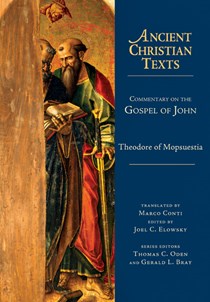 hardcover
Commentary on the Gospel of John
Ancient Christian Texts
by Theodore of Mopsuestia
Edited by Joel C. Elowsky
Translated by Marco Conti
Series edited by Thomas C. Oden and Gerald BrayTheodore of Mopsuestia, born in Antioch (c. 350) and a disciple of Diodore of Tarsus, serves as one of the most important exemplars of Antiochene exegesis of his generation. Committed to literal, linguistic, grammatical and historical interpretation, he eschewed allegorical explanations that could not be supported from the text, though he was not averse to typological interpretations of Old Testament ...
-
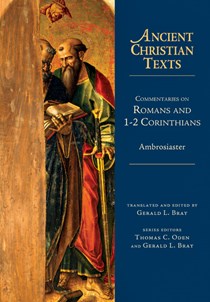 hardcover
Commentaries on Romans and 1-2 Corinthians
Ancient Christian Texts
by Ambrosiaster
Edited and Translated by Gerald BrayAmbrosiaster ("Star of Ambrose") is the name given to the anonymous author of the earliest complete Latin commentary on the thirteen epistles of Paul. The commentaries were thought to have been written by Ambrose throughout the Middle Ages, but their authorship was challenged by Erasmus, whose arguments have proved decisive.
Here for the first time Ambrosiaster's commentaries on Romans and ...
-
 hardcover
Commentaries on Galatians--Philemon
Ancient Christian Texts
by Ambrosiaster
Edited and Translated by Gerald BrayAmbrosiaster ("Star of Ambrose") is the name given to the anonymous author of the earliest complete Latin commentary on the thirteen epistles of Paul. The commentaries were thought to have been written by Ambrose throughout the Middle Ages, but their authorship was challenged by Erasmus, whose arguments have proved decisive.
The commentaries, which serve as important witnesses to pre-Vulgate ...
-
 paperback
Does God Exist?
A History of Answers to the Question
by W. David Beck
Does God exist?
Throughout the history of philosophical and theological reflection, this fundamental question has prompted a range of responses.
In one incisive volume, philosopher W. David Beck offers a narrative of pre-Christian, Jewish, Buddhist, Christian, and Islamic arguments for God's existence. Here, readers will encounter both classical and contemporary arguments, ...


