

HCV
-
 hardcover
Matthew 14-28
Volume 1B
Ancient Christian Commentary on Scripture
Edited by Manlio Simonetti
General Editor Thomas C. OdenThe Gospel of Matthew stands out as a favorite biblical text among patristic commentators. The patristic commentary tradition on Matthew begins with Origen's pioneering twenty-five-volume commentary on the First Gospel in the mid-third century. Inthe Latin-speaking West, where commentaries did not appear until about a century later, the first commentary on Matthew was written by Hilary of Poitiers ...
-
 hardcover
Matthew 1-13
Volume 1A
Ancient Christian Commentary on Scripture
Edited by Manlio Simonetti
General Editor Thomas C. OdenThe Gospel of Matthew stands out as a favorite biblical text among patristic commentators. The patristic commentary tradition on Matthew begins with Origen's pioneering twenty-five-volume commentary on the First Gospel in the mid-third century. Inthe Latin-speaking West, where commentaries did not appear until about a century later, the first commentary on Matthew was written by Hilary of Poitiers ...
-
 hardcover
Luke
Volume 3
Ancient Christian Commentary on Scripture
Edited by Arthur Just
General Editor Thomas C. OdenFor the church fathers the Gospels did not serve as resources for individual analysis and academic study. They were read and heard and interpreted within the worshiping community. They served as sources for pastoral counsel and admonition for those who were committed to the Way. Although Matthew and John were generally the preferred Gospels, Luke, because of his particular interests and unique contributions, ...
-
 hardcover
John 1-10
Volume 4A
Ancient Christian Commentary on Scripture
Edited by Joel C. Elowsky
General Editor Thomas C. OdenThe Gospel of John was beloved by the early church, much as it is today, for its spiritual insight and clear declaration of Jesus' divinity. Clement of Alexandria indeed declared it the "spiritual Gospel." Early disputers with heretics such as Cerinthus and the Ebionites drew upon the Gospel of John to refute their heretical notions and uphold the full deity of Christ, and this Gospel more than ...
-
 hardcover
Acts
Volume 5
Ancient Christian Commentary on Scripture
Edited by Francis Martin
General Editor Thomas C. OdenThe Acts of the Apostles—or more in keeping with the author's intent, the Acts of the Ascended Lord—is part two of Luke's story of "all that Jesus began to do and teach." In it he recounts the expansion of the church as its witness spread from Jerusalem to all of Judea and Samaria and to the ends of the earth.
While at least forty early church authors commented on Acts, the ...
-
 hardcover
Colossians, 1-2 Thessalonians, 1-2 Timothy, Titus, Philemon
Volume 9
Ancient Christian Commentary on Scripture
Edited by Peter J. Gorday
General Editor Thomas C. OdenChristianity Today Book of the Year
For the early church fathers, certain passages in the shorter letters of St. Paul proved particularly important in doctrinal disputes and practical church matters. Pivotal in controversies with the Arians and the Gnostics, the most commented-on christological text in these letters was Colossians 1:15-20, where Jesus ...
-
 hardcover
Hebrews
Volume 10
Ancient Christian Commentary on Scripture
Edited by Erik M. Heen and Philip D. W. Krey
General Editor Thomas C. OdenDistinctive in form, content, and style, the epistle to the Hebrews offers a profound high Christology and makes an awe-inspiring contribution to our understanding of Jesus as our High Priest. The earliest extant commentary on theletter comes to us in thirty-four homilies from John Chrysostom. These homilies serve to anchor the excerpts chosen by the editors of this volume because ...
-
 hardcover
James, 1-2 Peter, 1-3 John, Jude
Volume 11
Ancient Christian Commentary on Scripture
Edited by Gerald Bray
General Editor Thomas C. OdenChristianity Today Award of Merit winner
Because the Catholic Epistles focus on orthodox faith and morals, the Fathers drew on them as a means of defense against the rising challenge of heretics. Many of the Fathers saw in these letters anticipatory attacks on Marcion and strong defenses against the Arians. They did so quite naturally because in their ...
-
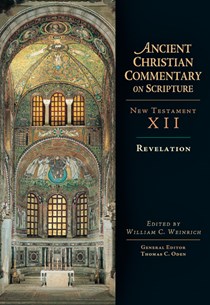 hardcover
Revelation
Volume 12
Ancient Christian Commentary on Scripture
Edited by William C. Weinrich
General Editor Thomas C. OdenThe Revelation to John—with its vivid images and portraits of conflict leading up to the formation of a new heaven and a new earth—was widely read, even as it was variously interpreted in the early church. Approaches to its interpretation ranged from the millenarian approach of Victorinus of Petovium to the more symbolic interpretation of Tyconius, who read Revelation in the sense ...
-
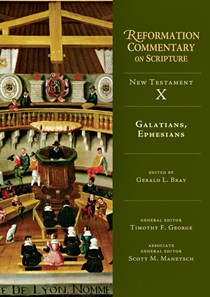 hardcover
Galatians, Ephesians
New Testament Volume 10
Reformation Commentary on Scripture
Edited by Gerald Bray
The gospel of justification by faith alone was discovered afresh by the Reformers in the epistolary turrets of the New Testament: the letters to the Galatians and the Ephesians. At the epicenter of the exegetical revolution that rocked the Reformation era was Paul's letter to the Galatians. There Luther, Calvin, Bullinger and scores of others perceived the true gospel of Paul enlightening a situation ...


