
Search Results
Showing 1 - 10 of 618 results
-
 paperback
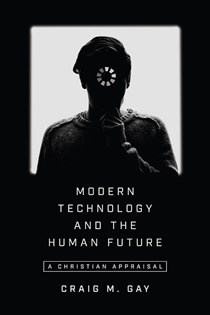
Modern Technology and the Human Future
A Christian Appraisal
by Craig M. Gay
Technology is not neutral.
From the plow to the printing press, technology has always shaped human life and informed our understanding of what it means to be human. And advances in modern technology, from computers to smartphones, have yielded tremendous benefits. But do these developments actually encourage human flourishing?
Craig Gay raises concerns about the theological ...
-
These books bring together a diversity of viewpoints from some of the most thoughtful Christian voices engaging technology today, offering biblical grounding, practical guidance, and honest wrestling with hard questions. Keep reading to find resources that will equip you to engage technology faithfully as a Christian.
-
 paperback
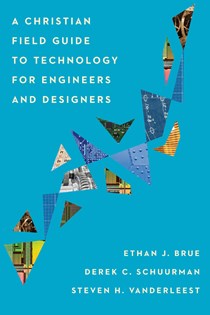
A Christian Field Guide to Technology for Engineers and Designers
by Ethan Brue, Derek C Schuurman, and Steven H VanderLeest
Our technology shapes the way we live, interact, work, play, and even worship. Technology and its power are both old and new—as is the wisdom we need to envision, design, build, and use it well. For Christians passionate about developing technology, it's not always clear how their faith and work intersect. How can designing and using technology actually be a way of loving God and ...
-
 paperback
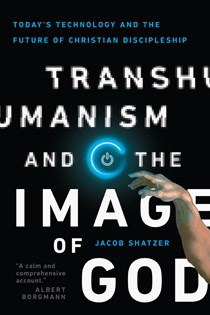
Transhumanism and the Image of God
Today's Technology and the Future of Christian Discipleship
by Jacob Shatzer
We're constantly invited to think about the future of technology as a progressive improvement of tools: our gadgets will continue to evolve, but we humans will stay basically the same. In the future, perhaps even alien species and intelligent robots will coexist alongside humans, who will grapple with challenges and emerge as the heroes. But the truth is that radical technological change has the ...
-
 paperback
Shaping a Digital World
Faith, Culture and Computer Technology
by Derek C Schuurman
Digital technology has become a ubiquitous feature of modern life. Our increasingly fast-paced world seems more and more remote from the world narrated in Scripture. But despite its pervasiveness, there remains a dearth of theological reflection about computer technology and what it means to live as a faithful Christian in a digitally-saturated society.In this thoughtful and timely book, Derek Schuurman ...
-
 paperback
Modern Art and the Life of a Culture
The Religious Impulses of Modernism
Studies in Theology and the Arts Series
by Jonathan A. Anderson and William A. Dyrness
Christianity Today Book of the Year Award of Merit - Culture and the Arts
For many Christians, engaging with modern art raises several questions: Is the Christian faith at odds with modern art? Doesmodernism contain religious themes? What is the place of Christian artists in the landscape of modern art?
Nearly fifty years ago, Dutch art historian ...
-
 paperback
Beyond the Modern Age
An Archaeology of Contemporary Culture
by Bob Goudzwaard and Craig G. Bartholomew
The modern age has produced global crises that modernity itself seems incapable of resolving—deregulated capitalism, consumerism, economic inequality, militarization, overworked laborers, environmental destruction, insufficient health care, and many other problems. The future of our world depends on moving beyond the modern age.Bob Goudzwaard and Craig G. Bartholomew have spent decades listening ...
-
 paperback
The Journey of Modern Theology
From Reconstruction to Deconstruction
by Roger E. Olson
Modernity has been an age of revolutions—political, scientific, industrial and philosophical. Consequently, it has also been an age of revolutions in theology, as Christians attempt to make sense of their faith in light of the cultural upheavals around them, what Walter Lippman once called the "acids of modernity." Modern theology is the result of this struggle to think responsibly about God within ...
-
 paperback
Modern Orthodox Thinkers
From the Philokalia to the Present
by Andrew Louth
Andrew Louth, one of the most respected authorities on Orthodoxy, introduces us to twenty key thinkers from the last two centuries. He begins with the Philokalia, the influential Orthodox collection published in 1782 which marked so manysubsequent writers. The colorful characters, poets and thinkers who populate this book range from Romania, Serbia, Greece, England, France and also include ...
-
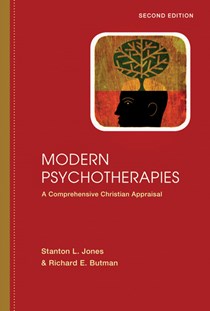 casebound
Modern Psychotherapies
A Comprehensive Christian Appraisal
Christian Association for Psychological Studies Books
by Stanton L. Jones and Richard E. Butman
The wide variety of psychotherapies that psychologists and students of psychology face can make for a confusing picture. The level of complexity is multiplied for Christians since they must ask how a particular psychotherapy fits (or doesn?t fit)with a Christian understanding of persons and their suffering. In this expanded and thoroughly update edition, Stanton Jones and Richard Butman continue ...