

Search Results
Showing 731 - 740 of 2008 results
-
 paperback
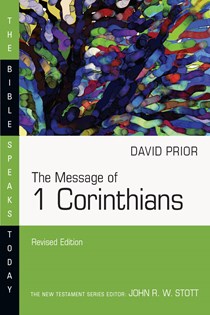
The Message of 1 Corinthians
The Bible Speaks Today Series
by David Prior
The ancient city of Corinth was well-known for its prosperity, diversity—and debauchery. Any church planted there was bound to have problems. Indeed, snobbishness, divisiveness, insensitivity, doctrinal looseness, and overexuberance were all too common in the Corinthian church. When the apostle Paul heard about these difficulties, he was grieved because he had founded the church ...
-
 paperback
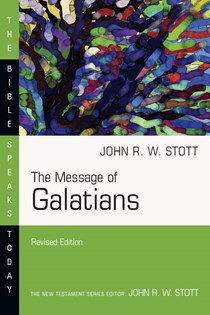
The Message of Galatians
The Bible Speaks Today Series
by John Stott
To enclaves of young converts in the mountains of Asia Minor, Paul wrote what is perhaps the oldest document in the New Testament—the letter to the Galatians. Paul's readers were struggling with numerous issues: How were men and women to be put right with God? Among a variety of religious authorities espousing different teachings, how were they to know who was right? How could Christians ...
-
 paperback
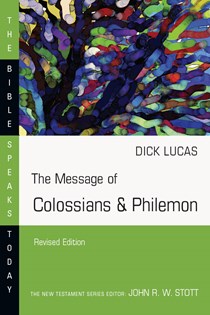
The Message of Colossians & Philemon
The Bible Speaks Today Series
by R. C. Lucas
Even healthy churches are never completely immune to the intellectual and spiritual pressures of their time. The church in Colossae was no exception. False teaching shaped by the spirit of the age was rising within the community,suggesting that a fuller knowledge and freedom was available beyond what ordinary Christians had experienced. Paul’s response was adamant: all God's fullness ...
-
 paperback
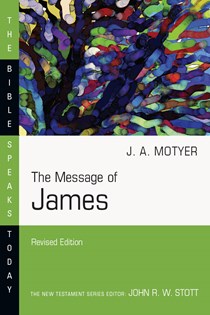
The Message of James
The Bible Speaks Today Series
by J. A. Motyer
The apostle James addressed his readers directly and pointedly, using vivid images from ordinary life and attention-gripping statements. His letter reveals how a genuine faith is a tested faith, and how encountering difficulties is an essential part of the growth to Christian maturity.
In this Bible Speaks Today volume, J. Alec Motyer's rich exposition brings James's letter ...
-
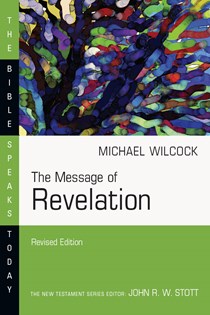 paperback
The Message of Revelation
The Bible Speaks Today Series
by Michael Wilcock
What is the book of Revelation? Does it describe in veiled language events of its writer's own day, or is it largely a prophecy of events still to come? What should readers today do with strange scenes such as creatures covered with eyes, seven bowls of wrath, and a seven-headed dragon?
Michael Wilcock lifts the curtain on Revelation as a drama in eight scenes, highlighting ...
-
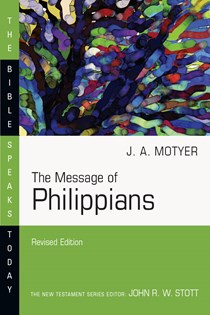 paperback
The Message of Philippians
The Bible Speaks Today Series
by J. A. Motyer
Paul wrote his letter to the Philippians while he was in prison, but it contains no hint of self-pity. Instead, the letter radiates joy—joy that Christ was proclaimed, joy in fellowship with the Philippian Christians, and above all, joy in Jesus himself.
In this Bible Speaks Today volume, J. A. Motyer identifies three major themes that filled Paul's heart and mind as he wrote: ...
-
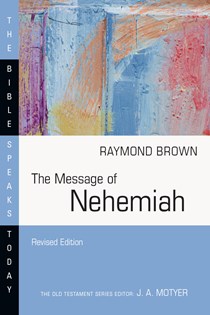 paperback
The Message of Nehemiah
The Bible Speaks Today Series
by Raymond Brown
The book of Nehemiah is about starting over again. Nehemiah, one of Israel's great leaders, tells firsthand the powerful story of rebuilding ancient Jerusalem's walls after the exile. In the face of great odds, this rebuilding represented the people's renewal of faith, their overcoming of national shame, and the reformation of their conduct.
In this volume, Raymond Brown ...
-
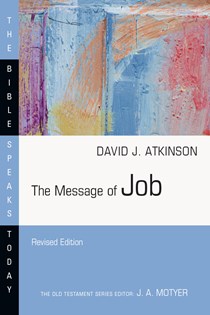 paperback
The Message of Job
The Bible Speaks Today Series
by David J. Atkinson
Why do people suffer? What is God's role in suffering? How can we help those who suffer?
The book of Job is all about human suffering. Its portrayal of one man's anguish, the ineffective responses of his friends, and his struggle for faith and understanding mirrors our own experiences in the world.
David Atkinson offers a pastoral exploration of Job's story. His compelling ...
-
 hardcover
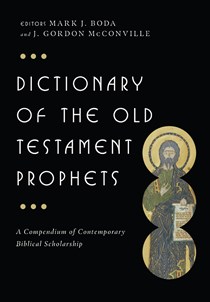
Dictionary of the Old Testament: Prophets
The IVP Bible Dictionary Series
Edited by Mark J Boda and J. Gordon McConville
ECPA Book Award finalist
With the Dictionary of the Old Testament: Prophets, IVP's Black Dictionary series completes its coverage of the Old Testament canonical books. A true compendium of recent scholarship, the volume includes 115 articles covering all aspects of Isaiah, Jeremiah, Ezekiel, the twelve "minor prophets" and Daniel. Each book's historical, cultural, ...
-
 paperback
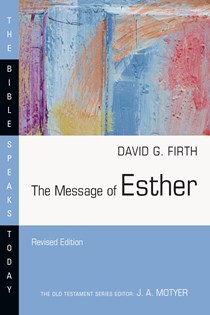
The Message of Esther
The Bible Speaks Today Series
by David G. Firth
The book of Esther tells the dramatic story of how the destruction of the Jews was averted through the bravery of Esther, the wisdom of Mordecai, and the unity of the Jewish people. Yet Esther is a rather strange book to find in the Bible. Not only is it set entirely outside of the Promised Land, it also shows no interest in that land. More than that, Esther is the only book in ...


