

Search Results
Showing 501 - 510 of 570 results

 Ebook
EbookThe Message of Joel, Micah & Habakkuk
The Bible Speaks Today Series
by David Prior
Where is God in times of disaster? How can God allow suffering? What are God's people to do about moral decay in society? People throughout the ages have pondered these questions, and three of the Bible's minor prophets—Joel, Micah, and Habakkuk—offer special insight on these perennial problems.
David Prior's passage-by-passage exposition of these three books provides careful ...
 Ebook
EbookThe Message of Amos
The Bible Speaks Today Series
by J. Alec Motyer
They neglected the needy, gained material riches through exploitation, and indulged in inauthentic religious practices. And rather than following God in the pursuit of justice, they drew on the divine name to justify their pretense. This is the social landscape in which the prophet Amos delivers a message from God. With searing clarity and daring hope, Amos calls God's people to ...
 Ebook
EbookThe Message of Obadiah, Nahum & Zephaniah
The Bible Speaks Today Series
by Gordon Bridger
Among the books of the Bible, Obadiah, Nahum, and Zephaniah are rarely read or preached. Gordon Bridger moves against this trend, encouraging the study and application of these Old Testament prophets.
Important biblical themes are found at the heart of these books: God's personal, sovereign, righteous, and loving character; facing up to sin and judgment; responding in repentance ...
 Ebook
EbookThe Message of Zechariah
The Bible Speaks Today Series
by Barry G. Webb
Zechariah is imbued from beginning to end with the same heart cry that Jesus turned into a prayer for the world: "Your kingdom come."
In this volume, Barry G. Webb explores the kingdom of God as the prophet Zechariah apprehended it. In oracles and visions Zechariah challenged his hearers to return to the coming kingdom, to cleanse themselves in anticipation of the cleansing ...
 Ebook
EbookThe Message of Malachi
The Bible Speaks Today Series
by Peter Adam
The book of Malachi fittingly sits in Christian Bibles as the last book of the Old Testament, which it assumes, summarizes, and applies. Yet it also looks forward to the New Testament with its promises of the coming reign of God.
A striking feature of the book is the people of God's inconsistent faithfulness. God's people neither serve God wholeheartedly nor turn entirely ...
 Ebook
EbookThe Message of Chronicles
The Bible Speaks Today Series
by Michael Wilcock
Michael Wilcock sees Chronicles first and foremost as a sermon. Its object: to foster a right relationship between God and his people. The Chronicler finds in the records of Israel the great overall pattern of God's hand in history. The Lord's constant mercy, love, and faithfulness shine through. With great perception, the Chronicler first selects and then proclaims this vibrant ...
 Ebook
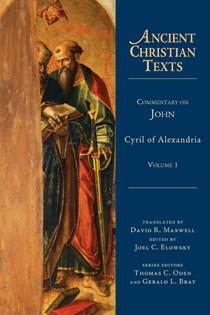
EbookCommentary on John
Ancient Christian Texts
by Cyril of Alexandria
Edited by Joel C. Elowsky
Translated by David R. MaxwellCyril of Alexandria (ca. 378-444), one of the most brilliant representatives of the Alexandrian theological tradition, is best known for championing the term Theotokos (God-bearer) in opposition to Nestorius of Constantinople. Cyril's great Commentary on John, offered here in the Ancient Christian Text series in two volumes, predates the Nestorian controversy, however, and focuses its theological ...
 Ebook
EbookGalatians, Ephesians
New Testament Volume 10
Reformation Commentary on Scripture
Edited by Gerald Bray
The gospel of justification by faith alone was discovered afresh by the Reformers in the epistolary turrets of the New Testament: the letters to the Galatians and the Ephesians. At the epicenter of the exegetical revolution that rocked the Reformation era was Paul's letter to the Galatians. There Luther, Calvin, Bullinger and scores of others perceived the true gospel of Paul enlightening a situation ...
 Ebook
EbookRomans 1-8
New Testament Volume 7
Reformation Commentary on Scripture
by Gwenfair Walters Adams
"If we have been united with him in a death like his, we shall certainly be united with him in a resurrection like his." (Rom. 6:5) With its themes of grace, sin, justification, and salvation through Christ alone, Paul's letter to the early church in Rome has been a primary focus of Christian reflection throughout church history. Sixteenth-century reformer Martin Luther reflected ...
 Ebook
EbookJoshua, Judges, Ruth
Old Testament Volume 4
Reformation Commentary on Scripture
by N. Scott Amos
"Where you go I will go, and where you lodge I will lodge. Your people shall be my people, and your God my God."
Ruth's response to her mother-in-law Naomi demonstrated both Ruth's loyalty to her family and her trust in God. The Reformers of the sixteenth century found theological significance in such Old Testament narratives. For example, German Lutheran pastor and theologian ...


