

Search Results
Showing 281 - 290 of 424 results
 Hardback
Luke
Volume 3
Ancient Christian Commentary on Scripture
Edited by Arthur Just
General Editor Thomas C. OdenFor the church fathers the Gospels did not serve as resources for individual analysis and academic study. They were read and heard and interpreted within the worshiping community. They served as sources for pastoral counsel and admonition for those who were committed to the Way. Although Matthew and John were generally the preferred Gospels, Luke, because of his particular interests and unique contributions, ...
 Hardback
John 1-12
New Testament Volume 4
Reformation Commentary on Scripture
Edited by Craig S. Farmer
Preaching's Preacher's Guide to the Best Bible Reference
The first eighteen verses of the Gospel of John make some of the most profound statements about the character and work of Christ in all of Scripture: "In the beginning was the Word, and the Word was with God, and the Word was God" (1:1); "all things were made through him" (1:3); "the Word became flesh and dwelt ...
 Hardback
Acts
Volume 5
Ancient Christian Commentary on Scripture
Edited by Francis Martin
General Editor Thomas C. OdenThe Acts of the Apostles—or more in keeping with the author's intent, the Acts of the Ascended Lord—is part two of Luke's story of "all that Jesus began to do and teach." In it he recounts the expansion of the church as its witness spread from Jerusalem to all of Judea and Samaria and to the ends of the earth.
While at least forty early church authors commented on Acts, the ...
 Hardback
Acts
New Testament Volume 6
Reformation Commentary on Scripture
Edited by Esther Chung-Kim and Todd R. Hains
Preaching's Preacher's Guide to the Best Bible Reference
The Reformation was a call to return with renewed vigor to the biblical roots of Christian faith and practice. Still, for the Reformers, the truth of the Bible could never be separated from the true community of God's people gathered by his Word. In the book of Acts, they found God's blueprint for how the church ...
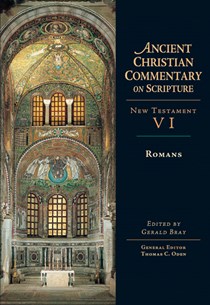 Hardback
Romans
Volume 6
Ancient Christian Commentary on Scripture
Edited by Gerald Bray
General Editor Thomas C. OdenChristianity Today Book of the Year
St. Paul's Letter to the Romans has long been considered the theological high-water mark of the New Testament. It was no less regarded by the ancient church, and patristic interpreters have left us an abundance of valuable comment on Romans.
This Ancient Christian Commentary on Romans collects the best and most representative ...
 Paperback
The Message of 1 Corinthians
The Bible Speaks Today Series
by David Prior
The ancient city of Corinth was well-known for its prosperity, diversity—and debauchery. Any church planted there was bound to have problems. Indeed, snobbishness, divisiveness, insensitivity, doctrinal looseness, and overexuberance were all too common in the Corinthian church. When the apostle Paul heard about these difficulties, he was grieved because he had founded the church ...
 Paperback
1 Corinthians
A Commentary on the New Testament
The IVP New Testament Commentary Series
by Alan F. Johnson
Upwardly mobile Christians facing radically diverse ethnic, religious, economic and social conditions. The church divided over issues of leadership and authority, sexual morality, gender and worship, marriage and divorce. Sound familiar?First-century Corinth and its challenges were not so different from our own. Yet in the midst of this detailed, practical letter to a church in crisis is found one ...
 Paperback
2 Corinthians
A Commentary on the New Testament
The IVP New Testament Commentary Series
by Linda L. Belleville
Though few church squabbles today come close to matching the intensity and seriousness of what Paul faced in the commercial and hedonistic hotbed of Corinth, his strategies and pastoral wisdom in confronting the problems there can still serve as ahelpful model for us in responding to a culture marked by individualism and materialism.In this careful study of 2 Corinthians, readers will find an introduction ...
 Paperback
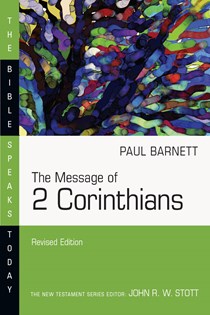
The Message of 2 Corinthians
The Bible Speaks Today Series
by Paul W. Barnett
The letter of 2 Corinthians reveals a powerful debate between the apostle Paul and a shadowy group of opponents, along with the local church members who supported them. Paul records a range of emotional extremes as he defends hisdoctrine, ministry, and character to this beloved yet troublesome congregation. In his response to the conflict, Paul develops a momentous theological message: ...
 Paperback
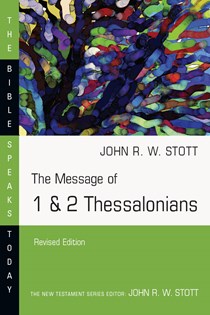
The Message of 1 & 2 Thessalonians
The Bible Speaks Today Series
by John Stott
The gospel shapes the church and the church spreads the gospel. In his heartfelt letters to the Thessalonians, the apostle Paul calls believers again and again to these essential truths. To encourage and correct the young church in Thessalonica, Paul addresses many issues that are still of vital importance today, such as Christian community, church leadership, moral living, evangelism, ...


