

Search Results
Showing 171 - 180 of 364 results
 Hardback
Joshua, Judges, Ruth
Old Testament Volume 4
Reformation Commentary on Scripture
by N. Scott Amos
"Where you go I will go, and where you lodge I will lodge. Your people shall be my people, and your God my God."
Ruth's response to her mother-in-law Naomi demonstrated both Ruth's loyalty to her family and her trust in God. The Reformers of the sixteenth century found theological significance in such Old Testament narratives. For example, German Lutheran pastor and theologian ...
 Hardback
Proverbs, Ecclesiastes, Song of Songs
Reformation Commentary on Scripture
Edited by David C. Fink
"For everything there is a season, and a time for every matter under heaven:
a time to be born, and a time to die..."
When the reformers of the sixteenth century turned to this well-known text from the Book of Ecclesiastes, they did not find a reason to despair, but rather confirmation of their hope and faith in God. For example, Martin Luther pointed ...
 Hardback
Matthew
New Testament Volume 1
Reformation Commentary on Scripture
Edited by Jason K. Lee and William M. Marsh
"As they were eating, Jesus took bread, and after blessing it broke it and gave it to the disciples, and said, 'Take, eat; this is my body.'"
How should one interpret these words of Jesus?
The sixteenth-century Reformers turned to Scripture to find the truth of God's Word, but that doesn't mean they always agreed on how to interpret it. For example, when approaching ...
 Hardback
Romans 1-8
New Testament Volume 7
Reformation Commentary on Scripture
by Gwenfair Walters Adams
"If we have been united with him in a death like his, we shall certainly be united with him in a resurrection like his." (Rom. 6:5) With its themes of grace, sin, justification, and salvation through Christ alone, Paul's letter to the early church in Rome has been a primary focus of Christian reflection throughout church history. Sixteenth-century reformer Martin Luther reflected ...
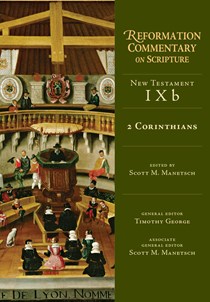 Hardback
2 Corinthians
New Testament Volume 9B
Reformation Commentary on Scripture
Edited by Scott M. Manetsch
"Therefore, if anyone is in Christ, he is a new creation. The old has passed away; behold, the new has come."
When the Reformers of the sixteenth century turned to this biblical text, originally written by Paul to the first-century church in Corinth, they found truths that apply to Christians regardless of their historical context. For example, Reformed theologian Wolfgang ...
 Paperback
Shame Redeemed
Learning to Live in Christ's Freedom
by Toni Kim
Foreword by Curt ThompsonDiscover the Unexpected Grace Found in Shame
We are God's beloved children. Yet too often our imperfections lead to feelings of shame that leave us insecure and anxious, affecting how we view ourselves, each other, and God. Shame makes us feel that we are not good enough and can prevent us from receiving the love God wants to lavish on us.
God wants more for us. We ...
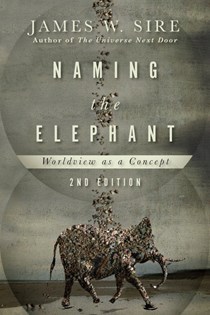 Paperback
Naming the Elephant
Worldview as a Concept
by James W. Sire
What is a worldview?What lies behind your thoughts about almost everything?For more than thirty years, James W. Sire has grappled with this issue. In this book he offers readers his most mature thought on the concept of a worldview, addressing such questions as
- What is the history of the concept itself?
- What is the first question you should ask in formulating a worldview?
- How ...
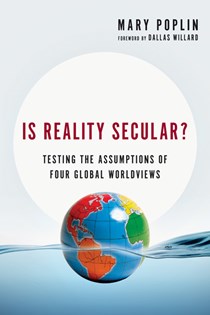 Paperback
Is Reality Secular?
Testing the Assumptions of Four Global Worldviews
Veritas Books
by Mary Poplin
Foreword by Dallas WillardWhat is the nature of reality?At the root of our society's deepest political and cultural divisions are the conflicting principles of four global worldviews. While each of us holds to some version of one of these worldviews, we are often unconscious of their differences as well as their underlying assumptions. Mary Poplin argues that the ultimate test of a worldview, philosophy or ideology is whether ...
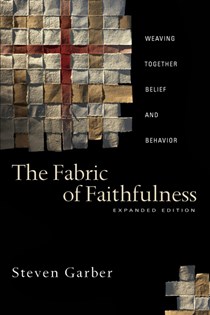 Paperback
The Fabric of Faithfulness
Weaving Together Belief and Behavior
by Steven Garber
Voted one of Christianity Today's Books of the Year
All kinds of important choices are made during the college years. Young men and women explore what they really believe about the nature of the world and the purpose of life. They choose their work. They build friendships or even choose to marry. They develop goals and adopt habits that may very well last a lifetime.
Yet ...
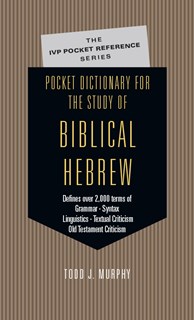 Paperback
Pocket Dictionary for the Study of Biblical Hebrew
The IVP Pocket Reference Series
by Todd J. Murphy
Of Greek and Hebrew, Hebrew strikes the most fear in the heart of the Bible student. The alphabet does not look anything like English. The vocabulary offers almost no points of contact with English. The verb system is utterly alien. And the lexicons, grammars and textbooks are wrapped up in a metalanguage--spiked with Latin--that is daunting in itself. For those who feel that studying the English ...


