

Search Results
Showing 131 - 140 of 424 results
 Hardback
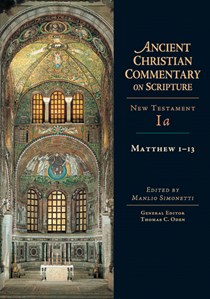
Matthew 1-13
Volume 1A
Ancient Christian Commentary on Scripture
Edited by Manlio Simonetti
General Editor Thomas C. OdenThe Gospel of Matthew stands out as a favorite biblical text among patristic commentators. The patristic commentary tradition on Matthew begins with Origen's pioneering twenty-five-volume commentary on the First Gospel in the mid-third century. Inthe Latin-speaking West, where commentaries did not appear until about a century later, the first commentary on Matthew was written by Hilary of Poitiers ...
 Hardback
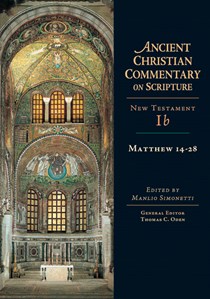
Matthew 14-28
Volume 1B
Ancient Christian Commentary on Scripture
Edited by Manlio Simonetti
General Editor Thomas C. OdenThe Gospel of Matthew stands out as a favorite biblical text among patristic commentators. The patristic commentary tradition on Matthew begins with Origen's pioneering twenty-five-volume commentary on the First Gospel in the mid-third century. Inthe Latin-speaking West, where commentaries did not appear until about a century later, the first commentary on Matthew was written by Hilary of Poitiers ...
 Paperback
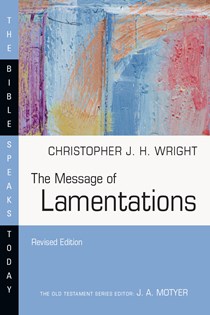
The Message of Lamentations
The Bible Speaks Today Series
by Christopher J. H. Wright
The destruction of Jerusalem by the Babylonians in 587 BC is the likely setting for the book of Lamentations. This was the most traumatic event in Old Testament history, as Israel faced extreme human suffering, the destruction ofthe ancient city, national humiliation, and the undermining of all that was thought to be divinely guaranteed, such as the Davidic monarchy, the city of ...
 Hardback
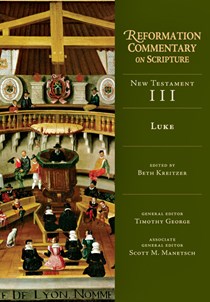
Luke
New Testament Volume 3
Reformation Commentary on Scripture
Edited by Beth Kreitzer
"For unto you is born this day in the city of David a Savior, who is Christ the Lord." Reflecting on this verse from the Gospel of Luke (2:11), Martin Luther declared it to be a summary of the gospel: "See here what the gospel is, namely, a joyful sermon about Christ our Savior. Whoever preaches him rightly preaches the gospel and pure joy."Reformation commentators meditated upon the significance ...
 Hardback
Commentary on John
Ancient Christian Texts
by Cyril of Alexandria
Edited by Joel C. Elowsky
Translated by David R. MaxwellCyril of Alexandria (ca. 378-444), one of the most brilliant representatives of the Alexandrian theological tradition, is best known for championing the term Theotokos (God-bearer) in opposition to Nestorius of Constantinople. Cyril's great Commentary on John, offered here in the Ancient Christian Text series in two volumes, predates the Nestorian controversy, however, and focuses its theological ...
 Hardback
Commentary on John
Ancient Christian Texts
by Cyril of Alexandria
Edited by Joel C. Elowsky
Translated by David R. MaxwellCyril of Alexandria (ca. 378-444), one of the most brilliant representatives of the Alexandrian theological tradition, is best known for championing the term Theotokos (God-bearer) in opposition to Nestorius of Constantinople. Cyril's great Commentary on John, offered here in the Ancient Christian Texts series in two volumes, predates the Nestorian controversy and focuses its theological ...
 Hardback
Lectures on the Psalms
Ancient Christian Texts
by Didymus the Blind
Edited and Translated by Jonathan Douglas Hicks"The Lord shepherds me, and nothing will be lacking for me. In a place of tender grass, there he causes me to encamp."
In his reading of Psalm 23, early Christian theologian Didymus the Blind perceived the comfort that is provided only by Christ, the good shepherd: "The disciples of Christ who have become perfect in his instruction . . . do not simply hear a voice, ...
 Hardback
Homilies on Numbers
Ancient Christian Texts
by Origen
Edited by Christopher A. Hall
Translated by Thomas P. ScheckOrigen of Alexandria (185-254), one of the most prolific authors of antiquity and arguably the most important and influential pre-Nicene Christian theologian, was a man of deep learning and holiness of life. Regrettably, many of his works are no longer extant, in part due to the condemnation of his ideas by the Fifth Ecumenical Council in 553. The condemnation, however, took little account of his ...
 Hardback
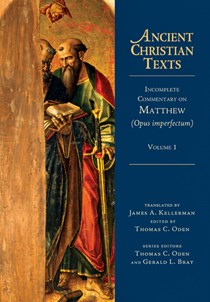
Incomplete Commentary on Matthew (Opus imperfectum)
Ancient Christian Texts
Edited by Thomas C. Oden
Translated by James A. KellermanIn the translator's introduction to this volume, James Kellerman relates the following story:
As Thomas Aquinas was approaching Paris, a fellow traveler pointed out the lovely buildings gracing that city. Aquinas was impressed, to be sure, but he sighed and stated that he would rather have the complete Incomplete Commentary on Matthew than to be mayor of Paris itself.
Thomas's ...
 Hardback
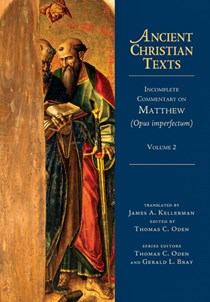
Incomplete Commentary on Matthew (Opus imperfectum)
Ancient Christian Texts
Edited by Thomas C. Oden
Translated by James A. KellermanIn the translator's introduction to this volume, James Kellerman relates the following story:
As Thomas Aquinas was approaching Paris, a fellow traveler pointed out the lovely buildings gracing that city. Aquinas was impressed, to be sure, but he sighed and stated that he would rather have the complete Incomplete Commentary on Matthew than to be mayor of Paris itself.
Thomas's ...


