

Search Results
Showing 101 - 110 of 141 results
 Paperback
Matthew
An Introduction and Commentary
Tyndale New Testament Commentaries
by R. T. France
Why did early Christians place Matthew first in the New Testament?"The early Christians were conscious, in a way few Christians are today, that their faith had its roots in Judaism. The issue of the relation between the Christian Church and the Jews remained a vital one both for the Christian's self-understanding and for their presentation of Christ to the non-Christian world. And it is Matthew's ...
 Paperback
Luke
An Introduction and Commentary
Tyndale New Testament Commentaries
by Nicholas Perrin
Series edited by Eckhard J. SchnabelIn this insightful and accessible commentary, Nicholas Perrin explores the many unique pictures of Jesus found in the Gospel of Luke—from being a child in his Father's house to associating with the poor and disreputable, in communion with the Holy Spirit, and, above all, setting out resolutely for Jerusalem to fulfill God's plan for the world.
With particular attention to ...
 Paperback
Romans
An Introduction and Commentary
Tyndale New Testament Commentaries
by David E Garland
Series edited by Eckhard J. Schnabel
Consulting Editor Nicholas PerrinRomans has been described as the theological epistle par excellence. The apostle Paul emphasizes that salvation is by God's grace alone and that freedom, hope, and the gift of righteousness are secured through Christ's death and resurrection, with the promise of a new and glorious destiny. Through the power of the Holy Spirit, believers can discern and do the will of God.
God's ...
 Paperback
1 Corinthians
An Introduction and Commentary
Tyndale New Testament Commentaries
by Thomas R. Schreiner
Series edited by Eckhard J. Schnabel
Consulting Editor Nicholas PerrinThe cosmopolitan city of Corinth was the site of one of the apostle Paul's greatest evangelistic successes. However, the church he founded was full of contention, ranging from questions about leadership to incest. Some Christians were taking fellow believers to court. There were issues concerning marriage, celibacy, food offered to idols, public worship, and spiritual gifts. In response, Paul offered ...
 Paperback
1 Peter
An Introduction and Commentary
Tyndale New Testament Commentaries
by Wayne A. Grudem
Series edited by Eckhard J. Schnabel
Consulting Editor Nicholas PerrinPeter's short letter to the "exiles of the dispersion" addresses many topics: holiness, the sufferings of Christ, God's sovereignty in salvation and life, the grace of God, the work of the Holy Spirit, the church as the new peopleof God, the reality of the unseen spiritual world, and trusting in God in the midst of daily circumstances. What ties all these concepts together, Wayne ...
 Paperback
Ephesians
An Introduction and Commentary
Tyndale New Testament Commentaries
by Darrell L. Bock
Series edited by Eckhard J. Schnabel
Consulting Editor Nicholas PerrinBiblical Foundations Award Finalist
Unlike Paul's letters to the Galatians or the Corinthians, the letter to the Ephesians contains almost no clues about the situation and issues its recipients faced. Nevertheless, the letter vividly depicts how God's will revealed in Christ reorients believers' lives toward unity, mutual respect, submission, and love—in short, new life in ...
 Paperback
Colossians and Philemon
An Introduction and Commentary
Tyndale New Testament Commentaries
by Alan J. Thompson
Series edited by Eckhard J. Schnabel
Consulting Editor Nicholas PerrinIn the letter to the Colossians, Paul points us to the sufficiency of Christ, urging readers to continue to trust in him. Because Christ is supreme over all, our hope is secure in him. Colossians also shows how the new life that believers have in Jesus is to reflect his character in everyday relationships.
Then in the letter to Philemon, we see the difference the gospel makes ...
 Paperback
Hebrews
An Introduction and Commentary
Tyndale New Testament Commentaries
by David G. Peterson
Series edited by Eckhard J. Schnabel
Consulting Editor Nicholas PerrinThe letter to the Hebrews provides an amazing combination of warnings and assurances to encourage Christians to persevere in faith, hope, and love. The basis for this is a profound reflection on the person and work of Christ, viewed as the fulfilment of Old Testament Scripture. In this Tyndale commentary, David G. Peterson shows how the author expounds the implications of the gospel ...
 Paperback
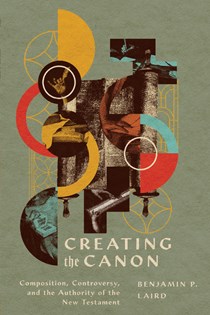
Creating the Canon
Composition, Controversy, and the Authority of the New Testament
by Benjamin Paul Laird
ECPA Top Shelf Book Cover Award
Unraveling the Origins of the New Testament Canon
Despite the profound influence of the New Testament, a variety of questions related to its background and history remain common. Contemporary readers often find the subject of the canon’s origin and formation to be complicated and confusing, while scholars continue to struggle ...
 Paperback
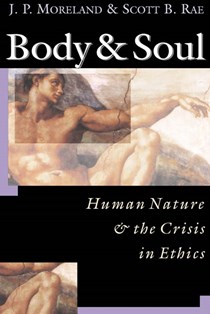
Body & Soul
Human Nature the Crisis in Ethics
by J. P. Moreland and Scott B. Rae
While most people throughout history have believed that we are both physical and spiritual beings, the rise of science has called into question the existence of the soul. Many now argue that neurophysiology demonstrates the radical dependence, indeed, identity, between mind and brain. Advances in genetics and in mapping human DNA, some say, show there is no need for the hypothesis of body-soul dualism. ...


