

Search Results
Showing 1021 - 1030 of 2008 results
-
 paperback
A Peculiar People
The Church as Culture in a Post-Christian Society
by Rodney R. Clapp
- Voted one of Christianity Today's 1997 Books of the Year
Christians feel increasingly useless, argues Rodney Clapp, not because we have nothing to offer a post-Christian society, but because we are trying to serve as "sponsoring chaplains" to a civilization that no longer sees Christianity as necessary to its existence. In our individualistic, technologically oriented, ...
-
 paperback
Always Reforming
Explorations in Systematic Theology
Edited by A. T. B. McGowan
The Reformed churches of the sixteenth century affirmed the need to be semper reformanda--always reforming.
But in the ensuing centuries, some have taken this conviction as a mandate to abandon the departure from received orthodoxy, while others have progressed toward a rigid confessionalism that cements the Reformation itself as a final codification of truth.
Between these ...
-
 paperback
An Emergent Theology for Emerging Churches
by Ray S. Anderson
Foreword by Brian McLarenIf the emerging church movement is looking for a theology, Ray Anderson offers clear and relevant theological guidance for it in this timely book.
Reaching back through time, Anderson roots an emergent theology in what happened at Antioch,where Saul (Paul) and Barnabas were set apart for a mission to establish churches outside of Jerusalem--among Gentiles who had to be reached in their own ...
-
 paperback
The Openness of God
A Biblical Challenge to the Traditional Understanding of God
by Clark H. Pinnock, Richard Rice, John Sanders, William Hasker, and David Basinger
Voted one of Christianity Today's Books of the Year
The Openness of God presents a careful and full-orbed argument that the God known through Christ desires "responsive relationship" with his creatures. While it rejects process theology, the book asserts that such classical doctrines as God's immutability, impassibility and foreknowledge demand reconsideration.
The ...
-
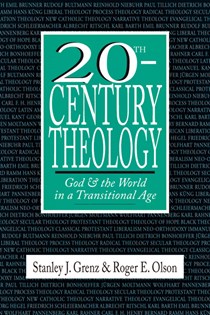 paperback
20th-Century Theology
God and the World in a Transitional Age
by Stanley J. Grenz and Roger E. Olson
- Recipient of a Christianity Today 1993 Critics' Choice Award
Now in paperback! Stanley Grenz and Roger Olson offer in this text a sympathetic introduction to twentieth-century theology and a critical survey of its significant thinkers and movements. Of particular interest is their attempt to show how twentieth-century theology has moved back and forth between two basic ...
-
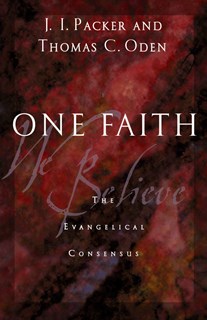 paperback
One Faith
The Evangelical Consensus
by J. I. Packer and Thomas C. Oden
Jesus Christ promised a unity for his church. Are there now clear evidences of that within evangelicalism? Or are evangelicals fragmenting into ever smaller divisions?Renowned theologians J. I. Packer and Thomas C. Oden make the case that there isa significant theological consensus holding the evangelical church together. With copious citations from statements produced since 1950 that are widely ...
-
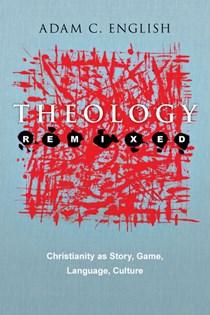 paperback
Theology Remixed
Christianity as Story, Game, Language, Culture
by Adam C. English
Jesus didn't give his followers a fixed set of statements defining everything they needed to know about the kingdom of God in a neat package. Rather he told stories, made comparisons, drew contrasts. He talked of a mustard seed, of yeast and of ahidden treasure to communicate some of the most important truths of the faith.Jesus didn't fall back on parables because he lacked the right words. Parables ...
-
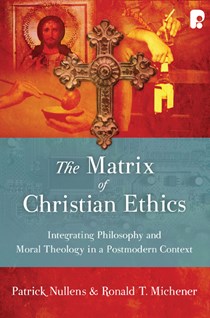 paperback
The Matrix of Christian Ethics
Integrating Philosophy and Moral Theology in a Postmodern Context
by Patrick Nullens and Ronald T Michener
In today's world, many Christians don't know how to live ethically, let alone know what ethics is. Christian ethics probes our deepest sensibilities as humans and how we seek the good for others as well as for ourselves as followers of Christ. This book begins to delve into this relevant and contemporary subject through methodological reflection on the commands, purposes, values, and virtues of ...
-
 paperback
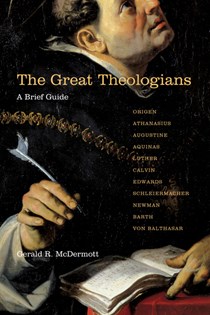
The Great Theologians
A Brief Guide
by Gerald R. McDermott
Who are the church's great theologians? What was special about their teaching? What can we learn from them today?
Gerald McDermott has written this book for those who want a solid introduction that is challenging, but not overwhelming. Provocative but satisfying. And not too long. McDermott not only informs us about eleven pivotal theologians from Origen to von Balthasar, ...
-
 paperback
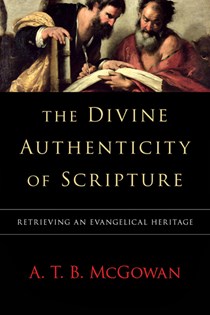
The Divine Authenticity of Scripture
Retrieving an Evangelical Heritage
by A. T. B. McGowan
Evangelicals have taken extraordinary care in formulating and articulating a high view of Scripture. And yet the doctrine is not without its inadequacies and its internal critics--both past and present.Reviewing the evangelical discussion and formulations over the past century and more, particularly in the Reformed tradition in North America, Andrew McGowan is not content with the present state ...


